Presence, Significance and Radiation in Acting: Creating the Psychophysical Foundation for Working on Chekhov’s Atmospheres[1]

<em>Presence</em>, <em>Significance</em> and <em>Radiation</em> in Acting: Creating the Psychophysical Foundation for Working on Chekhov’s Atmospheres<sup>[1]</sup>

Sol Garre* Approaching Acting Theory, Practice and Professional Knowledge How do actors learn to act? How do they cultivate their ability to create tangible characters? How do they radiate presence and significance on stage? These are some of the questions

Michael Chekhov’s Theatre Pedagogy in the Age of Cosmopolitanism

Michael Chekhov’s Theatre Pedagogy in the Age of Cosmopolitanism

Yana Meerzon* (Canada) Nephew of Anton Chekhov and a disciple of Konstantin Stanislavsky, the Russian actor, director and pedagogue Michael Chekhov (1891–1955) created one of the most challenging and inspiring acting theories of the twentieth century. For Chekhov, an actor’s

The Roots of African Theatre Ritual and Orality in the Pre-Colonial Period

The Roots of African Theatre Ritual and Orality in the Pre-Colonial Period

Ousmane Diakhaté** and Hansel Ndumbe Eyoh*** Theatre is one of the cultural elements that best exemplifies Africa. It is at the crossroads of the sacred and the profane, orality and the written word, of inner roots and external adjuncts. The

Anglophone Africa—Looking Back: The Beginnings of the Modern

Anglophone Africa—Looking Back: The Beginnings of the Modern

Hansel Ndumbe Eyoh* It is now generally accepted that there is something called anglophone African theatre, just as it is accepted that there is something called European or American theatre. Ever since Nigerian Wole Soyinka won the 1986 Nobel Prize,

African Theatre in a Global Context[1]

African Theatre in a Global Context<sup>[1]</sup>

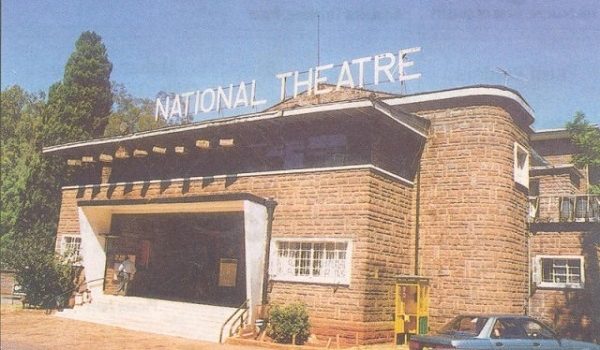
Don Rubin* The American expatriate poet Gertrude Stein once said that the problem in dealing with Los Angeles as a geographical entity was that “there’s no there there.” For many brought up on the professionalized Euro-American spoken theatre, or even

Ancient Meets Cutting Edge: China’s Wuzhen Theatre Festival

Ancient Meets Cutting Edge: China’s Wuzhen Theatre Festival

Lissa Tyler Renaud* Wuzhen International Theatre Festival. October 13 to 22, 2016, its fourth year. A total of seventy-nine performances by twenty-two invited productions, half from Europe, at thirteen theater spaces; new play competition with prizes; ongoing outdoor carnival; two

Un théâtre de l’excès

Un théâtre de l’excès

Selim Lander* Erzuli Dahomey, déesse de l’amour. Texte Jean-René Lemoine. Mise en scène et scénographie Nelson-Rafaell Madel. Avec Emmanuelle Ramu, Alvie Bitémo, Karine Pédurand, Claire Pouderoux et Adrien Bernard-Brunel, Mexianu Medenou et Gilles Nicolas. Lumières Lucie Joliot ; musiques Yiannis Plastiras ;

Un formidable retour aux sources

Un formidable retour aux sources

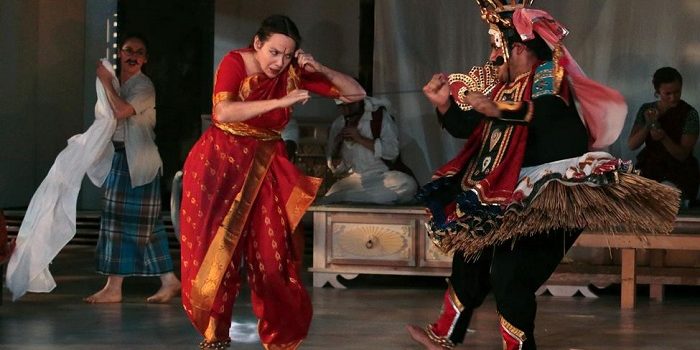
Jean-Pierre Han* Une chambre en Inde, création collective du Théâtre du Soleil dirigée par Ariane Mnouchkine. Le spectacle a été créé le 5 novembre 2016 à la Cartoucherie de Vincennes où il se joue jusqu’au 2 juillet 2017. Pour être

The Sins of the Parents: Several Characters in Search of an Author

The Sins of the Parents: Several Characters in Search of an Author

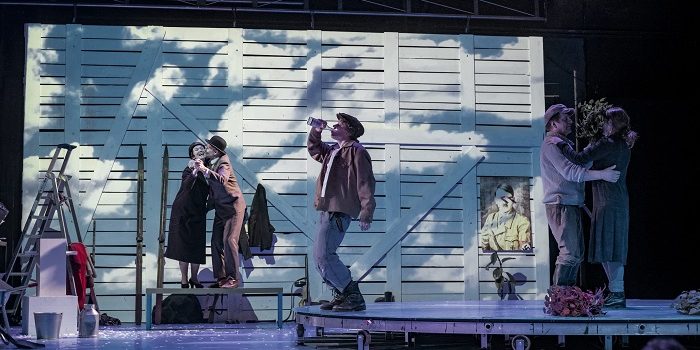
Soila Lehtonen* Arktinen hysteria (”Arctic hysteria”). A play by Juha-Pekka Hotinen and Atro Kahiluoto based on Marko Tapio’s novel. Dramaturge: Aina Bergroth. Director: Atro Kahiluoto. Scenography, projections and costumes: Reija Hirvikoski. Lighting designer: Ville Virtanen. Sound designer: Juhani Liimatainen. Premiered

The Present Meaning of “Stranger” Revealed in Cluj

The Present Meaning of “Stranger” Revealed in Cluj

Maria Zărnescu* INTERFERENCES International Theatre Festival, organized by The Hungarian Theatre of Cluj, Romania. Nov. 26 to Dec. 4, 2016. “Ubi bene ibi patria,” the famous Latin saying has become, in time, a motto for all the emigrants. The meaning