Time Out of Joint: Zoom Theatre and the Aesthetics of Acceleration in Wang Chong’s The Plague
Manuel García Martinez* and Yan Yan**
Abstract
The COVID-19 pandemic spurred the development of digital theatre worldwide as practitioners sought to sustain professional activity despite the impossibility of gathering audiences in physical spaces, while also responding to the public’s need for communication and live performance. This shift transformed staging practices, particularly the timing and tempo of performance, often resulting in faster-paced productions compared to traditional theatre. This article examines how digital staging—specifically Zoom theatre, one of the most widely used platforms by theatre practitioners in 2020 and 2021—reshapes theatrical tempo. It focuses on The Plague, an adaptation of Albert Camus’s La Peste, directed by Wang Chong, among the first online theatre productions in China, the epicentre of the pandemic. The analysis explores how this historical context fostered changes in tempo, situating them within broader processes of late modern acceleration while also identifying characteristics specific to live online performance.
Keywords: pandemic, zoom theatre, time, tempo, acceleration
Introduction
Sociology, as demonstrated by Paul Virilio, Nicole Aubert and Hartmut Rosa, has highlighted the acceleration of technical progress, ways of life and the social transformations characteristic of late modernity, particularly from 1990 to the present day. In this context of acceleration, the pandemic initially brought social life and interactions to a standstill. However, as it took hold, the response to the COVID-19 pandemic contributed to an acceleration of the digitalisation of communications worldwide. In this sense, this health crisis has been regarded as a “great accelerator” as it led to the adoption of modern working technologies, as well as the development of faster business strategies. This innovation generated both opportunities and challenges (Amamkwah-Amoah) and fostered an unprecedented acceleration of communications.
The acceleration of everyday life, in contrast to theatrical tradition, which has always favoured slowness as a form of aesthetic innovation, has manifested itself in theatre in various ways since the beginning of the twenty-first century (Garcia Martínez 2022 and 2023). Faced with the impossibility of meeting in person, part of the theatre industry reacted by organising online theatre events, which developed rapidly through the use of multiple digital platforms, such as Zoom, WhatsApp, Instagram and Twitch (Fuchs 65). This phenomenon led to a diversification of forms of theatrical production and reception. Furthermore, online theatre not only transformed staging but also altered one of its fundamental elements: time, and in particular tempo, which, in late modernity, has become a fundamental dimension of temporal perception.
The need to reflect the unprecedented situation caused by the Covid-19 pandemic meant that many of these performances addressed the immediate experience of the audience as their main theme: isolation and lockdown, along with their limitations and consequences. A significant proportion of the productions were based on texts written at great speed, responding to the need for immediate communication. However, other productions used classic texts in order to bring the community together and tackle essential issues, such as the way we live, fate and death.
For this reason, Albert Camus’s The Plague—a seminal work of French literature that imagines the unfolding of an epidemic in 1940s Oran—was adapted and staged via Zoom by the Chinese director Wang Chong. This article seeks to demonstrate, through an analysis of the production of The Plague, how theatre on Zoom represents a shift in the use of tempo and an acceleration compared to traditional performances. Whilst the situation was exceptional, it is worth asking to what extent the pandemic context and the development of online theatre favoured and entailed a change in the tempo of the performance as well as in the temporal experiences it created.
I The Scenic Renovation: When Staging Goes Online
China was the epicentre of the pandemic. In the early stages of the pandemic, theatres across the country closed completely and in-person performances were suspended. In the first quarter of 2020 alone, more than 20,000 performances were cancelled across the country. Key institutions, such as the National Grand Theatre of China, the Beijing People’s Art Theatre, the Shanghai Centre for Art and Drama and the China National Theatre Company, were forced to postpone or cancel numerous premieres and tours. Private theatre companies, due to their self-financing model, suffered even more from the collapse of commercial activity and the interruption of rehearsals, and faced a serious crisis of survival. As a result, in 2020, the cultural industry in China was forced to seek alternative ways to continue its activities. Both concert organisers and theatre groups began offering live performances online centred on the recording of classic plays, live online premieres, dramatised readings and virtual rehearsals via digital platforms, thus creating what is known as “theatre in the cloud.”
To preserve the experience of live performances, theatres began offering plays or live shows online. Performances of various kinds and levels of production followed one another, quickly reaching a large number of viewers. According to Zhu and Yao (17), on 20 March, the Shanghai Yue Opera Theatre Company broadcast the special programme Refined Melodies of Yue (越赏清音) live, with simultaneous free streaming across all online platforms, attracting over 1,700,000 viewers in two days. Equally successful, on 19 May, the musical A Thousand-Year Love (一爱千年) was broadcast on a pay-per-view basis, attracting over 200,000 viewers during its broadcast. On 23 May, the Shanghai Dramatic Arts Centre premiered the play The Taste of Hot Noodles (热干面之味), with an anti-COVID theme, initially staging an online performance but with the intention of staging a live performance at a later date. Initially streamed on Bilibili, a platform where the audience can comment in real time, it attracted 165,000 viewers in two hours, with over 4,000 interactive comments in danmaku.[1]
As for theatre festivals, from September 2020 onwards, all the performances at the 2020 Beijing Fringe Festival were streamed online so that a wider audience could watch them. The same trend continued during the 6th International Original Chinese Drama Festival in 2021, where six of the twenty-four performances were streamed online (Zeng 66). Programmes such as “Moving Forward Together with Art” by the Shanghai Dramatic Arts Centre, the National Grand Theatre’s series of online broadcasts over two consecutive years, as well as numerous productions streamed on platforms such as Bilibili, achieved tens of millions of views. These initiatives maintained the sector’s creative vitality and its connection with the public, whilst significantly expanding its social reach.
In terms of creative direction and thematic selection, the pandemic gave rise to a series of documentary-style works focusing on the fight against the epidemic, community life and the experiences of ordinary people, such as The Taste of Hot Noodles, Neighbourhood Committee and Against the Tide, creating a wave of creative output with a distinctly topical and public dimension. At the same time, state-run companies, supported by public policies and funding, continued to promote productions whose main theme was historical narratives, such as The Tide, Outpost, Art in the War of Resistance and Night on Xiangshan, which generally adopted a model of in-person premieres combined with online streaming to broaden their reach.
However, lockdowns recurred in 2022 as a result of sporadic outbreaks in various regions, and the performing arts market once again came under severe pressure. The number of performances and box-office takings fell considerably compared with the previous year. In a single month, nearly 9,000 performances were cancelled or postponed. Added to this was the prolonged restriction of capacity to 30% or 50%, which made it difficult for most productions to cover venue hire and staff costs. Numerous private companies were forced to resort to redundancies, disbandment or even leaving the sector, whilst the traditional model based on live performance suffered a major blow. Faced with the need to cut costs, spatial constraints and the search for greater operational flexibility, small-scale theatre, immersive theatre and lightweight productions experienced a rapid boom between 2021 and 2022 in terms of theatre production. Plays such as Apollonia sparked a trend in the sector, whilst small-scale productions such as The End of Spring or Symmetry breaking became key vehicles for the survival and expansion of private companies, promoting a shift towards more compact formats.
Overall, although the pandemic had a severe short-term impact and accentuated the divide between state institutions and private entities, it also objectively accelerated the sector’s digital transformation. This process made it possible to overcome the limitations of physical space, shaping a new theatrical system characterised by the integration of in-person and digital elements, lightweight production and the coexistence of multiple formats. Furthermore, the urgency and uncertainty of the situation, together with growing competition between different companies and the temporary restrictions on digital streaming, favoured the development of shorter and more dynamic performances, which could be considered faster paced compared to previous theatre.
In this context, on 5 and 6 April 2020, Wang Chong, theatre director and founder of the Théâtre du Rêve Expérimental group,[2] directed the play Waiting for Godot, which, according to Du, was the first Chinese production to be staged online. Instead of performing on stage, four actors performed live from three different cities, including Wuhan, the epicentre of Covid-19, when it was still under lockdown. The performance attracted an audience of 290,000 people. Almost a year later, on 18 March 2021, as part of the Hong Kong Arts Festival, Wang Chong premiered The Plague, a Zoom theatre production adapting Camus’s The Plague, directed by Neil Bartlett. The performance began at 9:00 p.m. (Hong Kong time) as part of the Hong Kong Arts Festival and lasted approximately one hour.
Similarly, following the declaration of lockdown, digital theatre performances were staged very quickly in numerous countries, with the notable feature that online theatre was viewed in many countries, not just the one in which it was broadcast. Everyone was reacting to and addressing the unprecedented situation of lockdown. For example, in the United States, Barbara Fuchs highlights the speed with which the first Zoom performances emerged during the pandemic. Richard Nelson’s What Do We Need to Talk About?, produced by the New York Public Library, premiered on 29 April and streamed on 28 June 2020, stands as a seminal work of Zoom drama. The characters, in this realistic play, discuss the pandemic and the everyday problems it generates, whilst also reflecting on the political issues of the era in which it was written (Fuchs 28–33). The Oedipus Project, performed by the Theatre of War Productions Company and directed by Bryan Doerries, swiftly adapted its repertoire of Greek tragedies, presenting a dramatised reading on 7 May 2020, with a clear social purpose: to unite the community during the pandemic to alleviate its suffering (Fuchs 33–8).
From the outset, theatre via Zoom sought to bring about changes in traditional theatre. For example, End Meeting for All I, II, and III, presented in April and May 2020 by the company Forced Entertainment, directed by Tim Etchells, deconstructed theatrical conventions (Fuchs 44–8). Online theatre suggested that the digital fourth wall was returning to the theatre (Staniškytė 31). Some of the theatre productions’ original plans for traditional performances were replaced by performances adapted to a new medium (Falter and Neville). In this context, adaptations tended, in most cases, to produce shorter texts with a faster pace.
From its earliest manifestations, theatre on Zoom introduced significant changes to the arrangement of windows on screen, which came to function as partial openings onto the stage space, blending recorded videos and the use of live music with the actors’ performance in the immediate present. Virtual performances took place in countries as diverse as France, Spain, Great Britain, Romania and Lithuania, where digital theatre and its innovations appear to have accelerated the dynamics of audience interaction, inviting spectators to participate through comments on social media (Todurut; Staniškytė 34–5).
From the outset, digital media has offered ample scope for creativity and innovation. This immense diversity of theatrical productions means that there is no single model of online theatre (Lavender 341). In fact, digital performances date back to 1993, with the example of Hamnet: Shakespeare’s Play by the Hamnet Players, directed by Stuart Harris, adapted for IRC (Internet Relay Chat) (Sant 248).
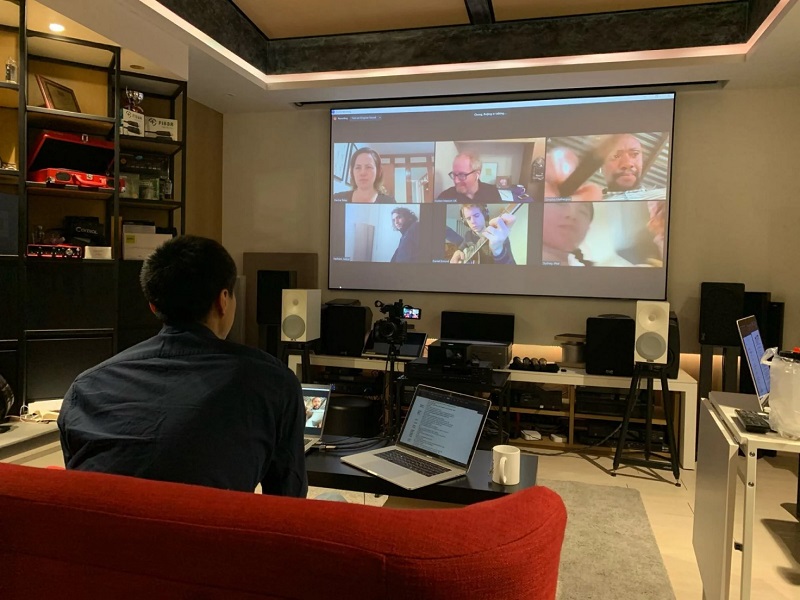
Theatre via Zoom, which has become the most widely used platform during the health crisis, represents a form of performance shaped by technological imperatives: immediacy, multitasking and remote synchronisation. Theatre delivered through this platform offers the audience the possibility of a different temporal experience: that of a performance filmed and broadcast simultaneously. However, as Toni Sant states, the interest in the technology itself takes a back seat to the new ways of telling stories through it (257). The changes in the windows of Zoom theatre surprise the viewer accustomed to television or cinema with a multitude of variations, encouraging attention focused on rapid continuity.
For this very reason, the online theatre that has spread with the pandemic exhibits certain recurring characteristics from a temporal perspective. Time has become a central theme in digital theatre (Dixon 11) and the digital arts “‘challenge’, ‘disrupt’, ‘reconfigure’ or, in some way, ‘explore’ notions of time” (Dixon 18). As Andy Lavender points out, online theatre produces an “extruded” time, that is, a form of development and temporal experiences determined by the nature of communication via a screen (344).
Furthermore, internet and Zoom theatre, by being broadcast simultaneously with their performance, create the sensation of sharing the same moment as a live event. In this sense, internet theatre became a form through which digital technologies expressed mutual presence in the instant (Lavender 346). Live online theatre thus appears to situate and interconnect actors and spectators within the same virtual space and time (352). For Dunne-Howrie, this marks a profound transformation. Live online theatre implies a new historical awareness of the individual’s future—that is, of their capacity to act and define themselves “as conscious political subjects” (178)—an awareness mediated by digitality. From the perspective of actors’ embodiment, the human being as a corporeal and carnal entity is transformed into a form of presence mediated by the internet (182). Furthermore, “live theatre online” (Sant 255) is also a multimedia and multidimensional art form, with different layers of time that combine various time zones and spaces (Lavender 344, 348).
Consequently, given that the temporal structure and pace of a theatrical performance depend on the manner of its unfolding, theatre via Zoom entails a different representation of time and pace, and the plurality of media employed tends to imply an experience of acceleration compared to in-person theatre. In this sense, theatre on Zoom, as well as that performed on other platforms, can be considered a form of theatre that is, initially, improvised in relation to the theatrical tradition.
II The Plague, an Outstanding Illustration: The Temporality of the Text
During the Covid-19 pandemic, sales of The Plague rose considerably, both in France and in various European countries, as the public turned to the book for an account of the experience of an epidemic (Maeso). Several critics highlighted the parallels and the modern relevance between the situations and moral dilemmas evoked in Camus’s novel and the situation experienced during the Covid-19 pandemic (Salcedo; Maeso).
Temporal Features of Albert Camus’s Novel
The timing of Wang Chong’s staging is shaped by the temporal characteristics of the novel. Its temporality is, above all, that of everyday, collective and objective time. The opening pages describe life in the city of Oran and the daily routines of its inhabitants. The novel depicts the daily rhythm, work, and moments of leisure such as Saturday afternoons or Sundays. The first-person plural, “we,” frequently replaces other pronouns: “What needed to be emphasised was the banal aspect of the city and of life. But one gets through one’s days without difficulty as soon as one has established routines” (Camus 36).
In this context, the plague is presented as a collective disease that dehumanises, leading to the loss of individuality and identity (Levi-Valensi 82). The individual and subjective experience of the novel’s main characters is embedded within this collective sense of time. Thus, the plague causes each character to adopt their own stance in the face of the disease that threatens them.
This sense of time is heightened by the fact that Camus’s novel is presented as a chronicle of the plague that struck Oran in the 1940s. As such, the narrator, Dr Rieux, recounts the events in chronological order, from the first signs of the epidemic’s emergence—with the appearance of rats and the first people falling ill—through the city’s isolation to prevent the disease from spreading further, to the disease’s eventual disappearance. The chronicle presents events day by day, in the journalistic sense, commenting on them and dwelling on those that are most significant to the narrator. In contrast to “stories” that establish a unity and highlight causal relationships between events, the chronicle retains the haphazard nature of an accumulation of events.
This narrative is structured around the encounters between the characters, whose dialogues drive the plot forward (Levi-Valensi 50): Dr Rieux’s meeting with Monsieur Michel, the caretaker of the building where he lives, which takes place on 17 April, with Judge Otto, with the journalist Rambert, with his friend Tarrou, etc. This temporal continuity is overlaid by the contiguity of the main characters, which introduces unpredictability (Levi-Valensi 48). Influenced by Marcel Proust, Camus highlights the moments, scenes or episodes to which he attaches greater significance. The various episodes are thus linked through the use of diverse narrative devices, such as the repeated references to the struggle against the plague and the disruption of life that alters the continuity of the calendar (Levi-Valensi 52–3).
However, Camus divides the novel into five parts, in a clear literary allusion to the structure of tragedy, that is, to a familiar and limited temporal structure, conducive to highlighting the shifts in the pace of the narrative. From its emergence, the disease builds to a crescendo of horror before finally subsiding. In this way, the narrative progresses in stages and the novel’s timeline reflects the progression and acceleration of the disease, creating dramatic tension regarding its outcome. The action of the work spans nine months, from the appearance of the first dead rat heralding the impending plague on 16 April, to the moment when the city gates are reopened at dawn on a February morning the following year.
The disease forces the authorities to impose an indefinite quarantine and close the city gates, isolating its inhabitants from the rest of the world. The characters’ time becomes a time of separation and exile–a new era to which they are subjected, which they do not know and cannot control. They thus find themselves in a situation of suffering, a present devoid of memory or hope: they feel trapped in a city where the disease is spreading. Faced with this absurd situation, the characters are confronted with the responsibility of their actions and feelings, such as the desire to flee (symbolised initially by Raymond Rambert), taking advantage of the situation for personal gain (symbolised by Cottard, who tries to profit from those wishing to escape), an intransigent religious interpretation of the plague (personified by the Paneloux), or the decision to confront the disease and the absurd, despite the initial lack of adequate resources, symbolised by Dr Rieux or his friends Grand and Tarrou, to mention but a few of the main characters.
The characters facing the epidemic live in the time of the action, in which even the future refers to the present of rebellion against absurdity and the passion for life: the characters show that hope allows them to transcend the immediate present thanks to human conscience and the possibility of collective action. In this situation of urgency, the novel celebrates modest and honourable characters, such as Dr Rieux, Tarrou and Grand, who reject heroism and approach daily events with simplicity and honesty, giving continuity to their lives. The characters’ solidarity with their fellow human beings encapsulates the novel’s fundamental ethical meaning, although initially most of them are alone and find a purpose in their lives through their connection to the group, in collective action and the struggle against the disease.
To convey this tragic situation, the author adopts a style that shows his search for the precise word, but that is, above all, characterised by simplicity and great restraint in evoking feelings and emotions, avoiding psychological analysis or melodramatic scenes, and prioritising the unfolding of events and the passage of time. Only at certain moments does the narrator adopt a satirical tone, for example, when he mentions the health authorities’ inability to make decisions.
Whilst the narrative follows a linear sequence, the overall plot is characterised by a cyclical sense of time: at various points, the novel highlights the repetition of events and the characters’ tasks. This cyclical temporality corresponds to that described in Camus’s essay The Myth of Sisyphus published in 1942. Similarly, the novel ultimately emphasises that the plague may lie dormant after the end of the epidemic. Like a tragedy, the novel possesses an allegorical meaning and can be read as an allegory of the recently concluded Second World War, the occupation of France and the restrictions endured by the population, by exposing the ideological problems of that era as reflected in the attitude the characters adopt towards the plague. However, for the author and most critics, the plague symbolises every form of epidemic and evil that may threaten humanity. The book enjoyed immediate success and worldwide circulation, which has continued to this day. Having examined the period of Camus’s work, it is clear that Wang Chong’s stage adaptation introduces several changes in his adaptation of the text.
Temporal Features of Wang Chong’s Adaptation
The main change lies in the reduction of the text. The narrative sections of the original text are shortened, adapted and replaced by a succession of scenes consisting of monologues or dialogues, focusing on the most dynamic episodes of the narrative whilst simplifying the action. There are numerous omissions. For example, certain passages in Part III that describe the illness at its peak are omitted; similarly, a significant section of the novel’s fourth part is left out, as is the epilogue concerning the narrator’s identity, which in the novel emphasises the tragic dimension of the action (Lévi-Valensi 44). The staging introduces major temporal ellipses: the months of October, November and December and the Christmas period are announced by Karine Teles, the Brazilian actress playing Rambert, whilst she remarks that the longer one waits, the further away and more distant the future becomes. As a result, numerous episodes are different from the novel. One example of this is the fact that some male characters—such as Rambert and Tarrou—are played by actresses, Karine Teles and Sidney Zhao, respectively. Similarly, certain episodes stand out more than others. The staging devotes a significant amount of time to the beginning of the novel, particularly the appearance of the rats and the outbreak of the plague. The production also emphasises the scene in which Tarrou wonders if he can help, to which Dr Rieux responds by questioning his motives; the actress then replies that she is doing so out of “morality.”
Following this opening, the stage action accelerates, highlighting sequences that underscore the novel’s moral values: the constant struggle against the disease and the evil it symbolises, even in the absence of any prospect of success. In this way, the production accentuates and elevates the ethical dimension of the novel. Furthermore, the staging highlights certain dramatically significant moments, such as the discovery of the serum, thereby creating short scenes that generally represent, in a metaphorical way, milestones in the fight against the disease.
However, the most significant difference is the reduced number of characters, as the Zoom production is limited to six roles performed by six actors. Scottish actor Forbes Masson plays Dr Rieux; Brazilian actress Karine Teles appears as Rambert; Hashem Adnan plays Cottard; South African actor Simpho Mathenjwa takes on the role of Grand, Rieux’s friend; Chinese actress Sydney Zhao plays Tarrou; and American actor Henri Emond both sings during the performance and portrays the incompetent health authorities. Certain central characters, such as the priest Paneloux, are omitted from the adaptation without reference to the debates their ideas provoked (the existence of God and the existence of evil). Meanwhile, other characters are only mentioned, such as Judge Otto, an omission that accelerates the narrative. The adaptation also shortens the dialogue, at times reducing it to just a few words, thereby conveying an obsession with the present. This succession of brief exchanges further contributes to the acceleration of the narrative flow.
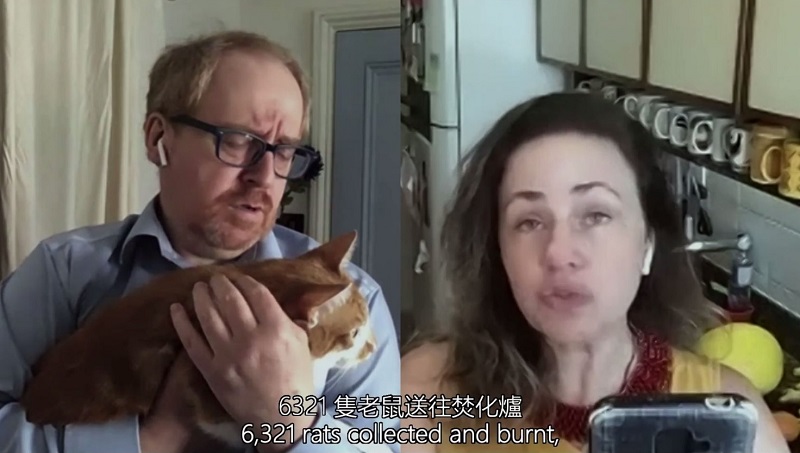
The adaptation transforms the novel’s representation of time into the dramatic and concise unfolding of a one-hour stage production, fostering a concentration of emotions. The inclusion of specific dates (4, 8, 9, 13 May) introduces an effect of ‘cumulative urgency’ and an accelerated temporal rhythm, quantifiable through dates, figures, and the accumulation of data. This conveys an obsession with time during the pandemic—as in any lockdown situation—which aligns with media hyper-time, the contemporary fixation on the hour and on real time.
III The Tempo of The Plague Zoom Production
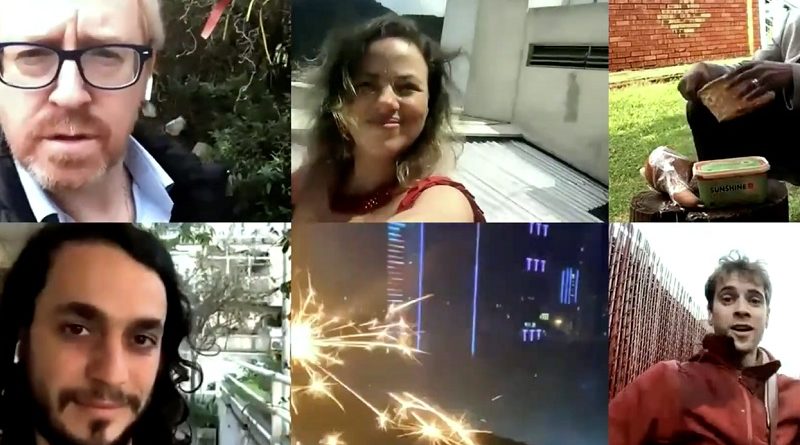
The most notable feature of The Plague, staged via Zoom, is that its actors—of different nationalities—are located in different parts of the world and filmed simultaneously. In the opening scenes, corresponding to their first appearances, both their locations and the local times are indicated. Appearing successively on screen are Scottish actor Forbes Masson in London (1:00 p.m.); Chinese actress Sydney Zhao in Wuhan, China—the epicentre of the Covid-19 crisis—(9:00 p.m.); Brazilian actress Karine Teles in Rio de Janeiro (10:00 a.m.); Lebanese actor Hashem Adnan in Beirut (3:00 p.m.); South African actor Simpho Mathenjwa in Johannesburg (also 3:00 p.m.); and American actor Henri Emond in New York (8:00 a.m.), who plays the banjo during the opening scenes.
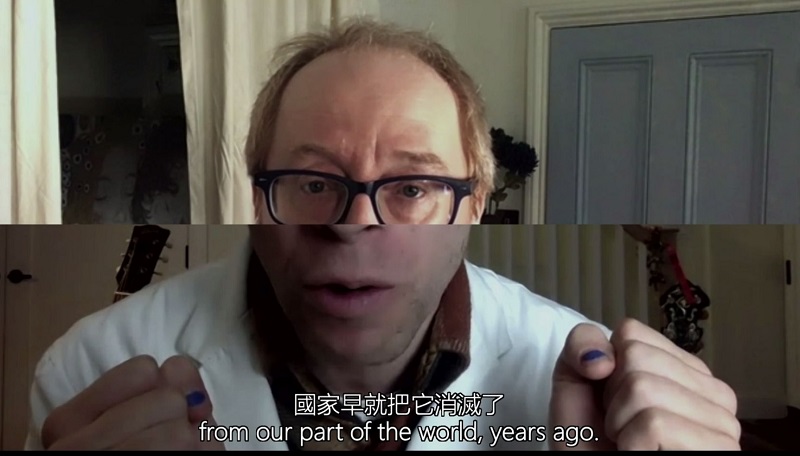
The show does not depict the original setting of Camus’s novel, the 1940s, but instead situates the action in a world ravaged by the Covid-19 pandemic. The characters are inside their homes as if confined there and, in several scenes, wear face masks similar to those used during the Covid pandemic.
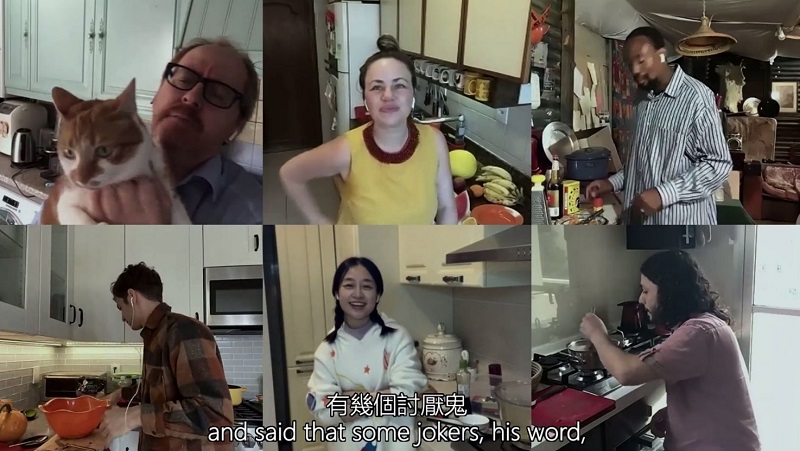
Following these opening images, the most frequently used technique in The Plague is the multi-screen display, in which two or more adjacent sections appear, each showing different images of up to six characters, each filmed by a separate camera. On a panoptic screen, before the account of the epidemic properly begins, the viewer sees all the characters at the same time. The characters take turns speaking. At the start of the performance, only the actor playing the bath attendant performs a different action. The others are preparing various dishes in their kitchens. These images are linked by the characters’ gazes: whilst performing the same action, they direct their attention towards the cameras filming them from the side. Their dialogue passes through the camera, that is, through the audience’s gaze. The characters converse amicably, with a certain degree of complicity, whilst asking one another what they are cooking. Consequently, the Zoom performance transforms the collective time of everyday city life into the collective and complex present of telematic communication—a sum of individual times, with each character in their own window on the Zoom screen—which in turn reflects the initial loneliness of the novel’s characters.
From a temporal perspective, theatre via Zoom lends a sense of speed to the unfolding of events by bringing together, in a single moment and within the same virtual space, actors who are physically separated by considerable distances, enabling them to perform and converse together. This immediacy of communication—which goes unnoticed due to our use of modern means of communication—is nonetheless an extraordinary acceleration compared to the usual dialogue in theatre. To achieve this, The Plague employs multiple resources, which are outlined below.
The opening sequence sets the tone for the rest of the performance, shaping the audience’s perception of time by setting expectations for what is to follow. After the characters have been introduced, Forbes Masson, who plays Rieux, begins to tell the story, which is then continued by Hashem Adnan, the Lebanese actor. The succession of actors taking the floor on screen reflects the continuity of the novel. This opening image, featuring the six actors, remains throughout the first twelve minutes of the performance. Similarly, this ensemble scene is repeated periodically throughout the performance, creating a temporal space composed of the characters’ presence, characterised by a complexity generated by the accumulation of small actions that impart a rapid tempo to the performance.
The extreme segmentation of the narrative in the opening minutes—during which multiple actors take turns narrating the first three pages of Camus’s The Plague, each delivering only a few lines—produces a familiar yet paradoxical dramatic effect: a sense of fluidity that persists into the subsequent sequences. At the same time, the actors take time to explain the situation, creating an impression of leisurely unfolding. Each remains in motion, preparing meals in their respective kitchens and performing similar actions with distinct gestures, thereby generating a dense flow of information. A paradoxical acceleration thus emerges: the viewer experiences a sense of rapidity while simultaneously perceiving that the development itself is not particularly fast. This duality allows the viewer to follow the rapid continuity while also registering the waiting, the anxiety, and the characters’ confrontation with fate.
Next, the sequence of images corresponds to a continuous montage, insofar as each character appearing on screen picks up the narrative begun by the previous character. However, it is also an alternating montage because the same situation—the pandemic and the lockdown—occurs in different places at the same time. Furthermore, the interior spaces seen by the viewer represent, depending on the moment of the action, a multiplicity of imaginary spaces (a hospital, an office, the street…), an effect enhanced by the scarcity of sets and the images being limited to a section of a room as the account of the epidemic begins, which may suggest that the characters are simultaneously everywhere and nowhere (Yizhou 82). All this results in a rapid continuity, with varying rhythms and speeds, which mitigates the sense of disorder in the novel’s events.
The absence of pauses also helps to heighten the sense of speed and acceleration: the shots follow one another, with clean cuts, without pauses between them. Sometimes these are even abrupt cuts. The editing of the images implies a temporal condensation, which coincides with the acceleration of the story and the spread of the plague recounted by the characters. The shots are linked by audio bridges, by the sound itself; for example, the opening images of the performance are linked by the music played by the actor in New York. This connection between the shots reflects the pace of a chronicle, fostering the perception of the rapid succession of events.
Furthermore, the proximity of the images, which offers a new form of intimacy with the characters—a characteristic of online theatre, as highlighted by Dixon and Lavender—allows The Plague to portray the characters immersed in a strange struggle against darkness and disease, a persistent and blind struggle that unfolds in enclosed spaces. In this way, the use of Zoom reflects both the variety and intensity of the novel’s various moments of action and adapts them to the accelerated pace of contemporary communications. Consequently, it can be argued that, in this context, the choice of Camus’s The Plague is doubly relevant: through its depiction of a lockdown and the fight against disease, and through the use of one of the communication tools brought to the fore by the Covid-19 pandemic for its staging.
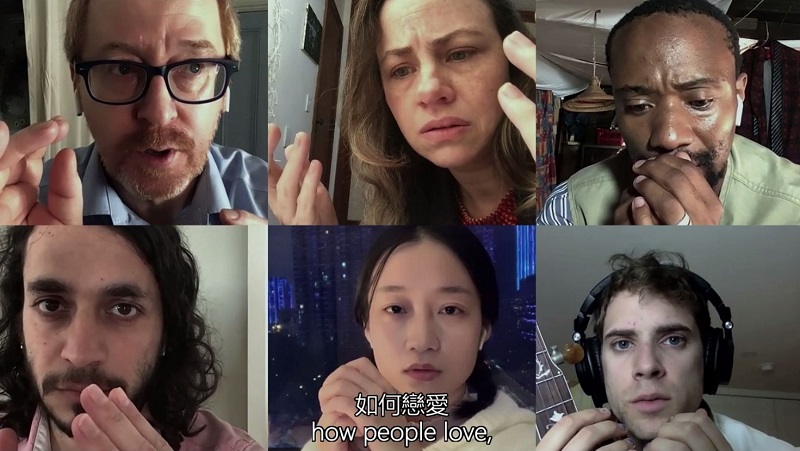
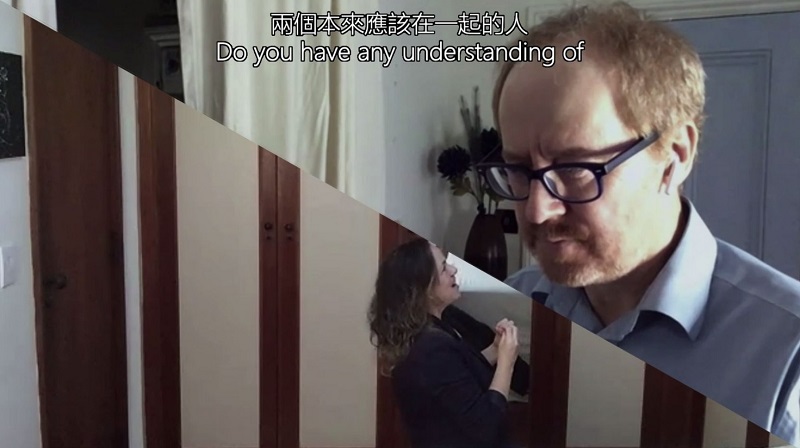
However, it is, above all, the constant variation in the arrangement of the images that creates a sense of acceleration: there are numerous images in which the screen is split in two, with a character in each section; in others, the images take the form of two squares placed side by side; on other occasions, they consist of two joined isosceles triangles. At another point, the images of Dr Rieux and Grand come together in the centre as if they were two halves of the same face when, at the beginning of the story, they express their agreement, speaking of their absent wives (Camus 90) and the fight against the disease. Similarly, when Cottard has attempted suicide, he appears lying down in an image that covers the entire lower part of the screen, whilst the upper part is occupied by images of the actors portraying Dr Rieux and Grand, who are attending to him; these images rotate on their own axes as if the characters were observing the patient from different points of view.
Furthermore, in the sequence of scenes, the use of different shots and unexpected visual arrangements on the multi-screen also helps to emphasise the significance of certain episodes in the narrative. For example, the discovery of the first serum is emphasised by a central image of a vial containing a yellow and red liquid, towards which several characters—Tarrou, Grand, Rieux and Cottard—whose images are arranged around it, seem to be looking. Similarly, the most tragic and painful moments in the novel, such as the death of Judge Othon’s son—which takes place at night following the administration of the serum—are the subject of a specific visual and emotional intensification. On this occasion, the screen shows only Dr Rieux’s face in a dark image, where only the reflection of light on his glasses is visible. The arrangement of the images carries metaphorical weight and signifies the relationships between the characters, creating a rhythm that enhances the sense of speed. These techniques multiply, producing a sensation of acceleration: the variety of shot compositions and their constant renewal maintain and demand the viewer’s attention.
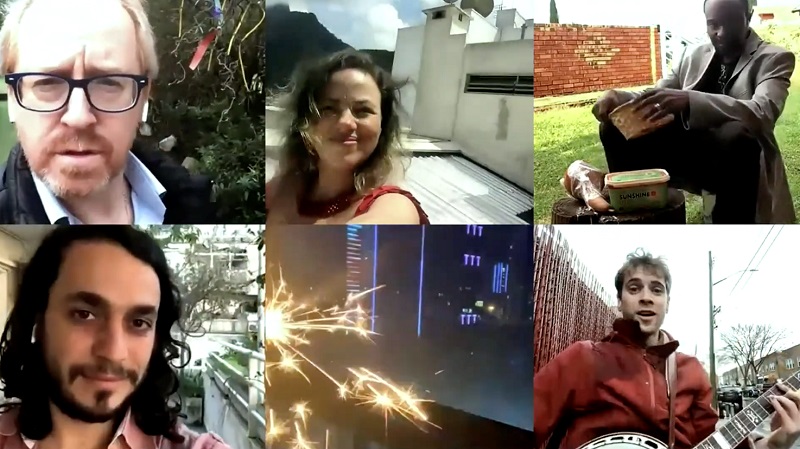
The alternating pace of the narrative also contributes to the sense of fluidity. The Zoom adaptation uses two paces: on the one hand, it presents a fluid continuity of scenes, with dialogue rendered at a pace close to that of reality through the synchronisation between two characters in conversation (Goutte 155), during which the narrative slows down: these moments help to convey the richness and depth of the ideas expressed in the novel, whilst representing the immobility brought about by the pandemic; on the other hand, the rapid succession of images and scenes, as well as the sudden shift from one actor’s image to another, create a sense of acceleration.
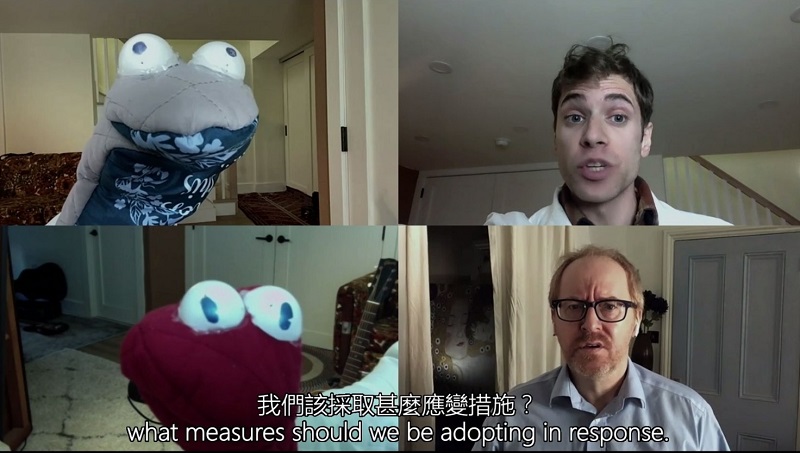
The abrupt shifts in the actors’ tone, as they move from cheerfulness to seriousness without a break, also contribute to this sense of speed. The staging adopts, for example, a sarcastic tone in the depiction of the meeting of doctors from the health commission at the prefecture, where they spend their time discussing the name of the disease rather than deciding on the measures they need to take: of the four windows on the Zoom screen, two are occupied by puppets, in a clear parody.The repetitions and constant variations in the images lend the staging great artistic coherence, emphasising the theatricality of the performance; for example, the numerous close-ups of the characters’ faces, characteristic of Zoom communications, and their rapid succession.
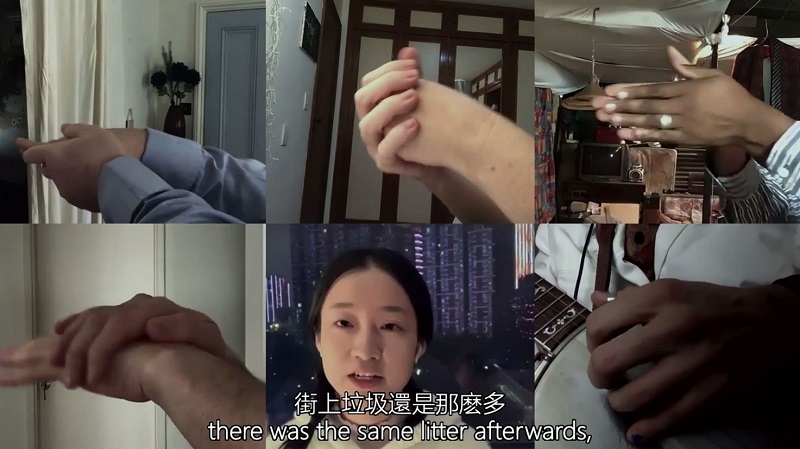
The show also uses very rapid gestures to evoke the unbridled speed of the disease: towards the end of the performance, in the six windows on the screen, all the characters wash their hands, whilst the voices indicate that, despite the spread of the disease, all the inhabitants of the suburbs continued to go out. One after another, the characters speak very rapidly to the camera, mentioning the accumulation of days with different dates (11 May, 13 May, 14 May) whilst the movements of their hands accelerate onscreen. The rapid pace of the action persists throughout the performance. The diversity, the changes in images and the breaks continue until the end, preserving the sense of acceleration within the repetitions.
However, it should be noted that this acceleration in online theatre is not of the same nature as live theatre, since the temporal experience and awareness of time depend on the “empirical contents that structure it” (Dixon 15). In a performance where the audience and the actor are present in the same space, the acceleration stems from the multiplicity of elements that make up the staging (set design, costumes, video, music, lighting, the actors’ words, etc.), which possess a material specificity and distinct temporalities. Consequently, their simultaneity implies a sense of density, which, in turn, creates the sensation of acceleration. Conversely, in Zoom theatre, the material distinctiveness of the various elements of the staging is diminished, and the acceleration stems less from the material simultaneity of all the elements of the performance than from the rapid succession of images and their variations.
Nevertheless, although audiences of Zoom theatre have come to accept the actor’s virtual presence (Lavender 346), as well as that of other staging elements, The Plague complicates this condition. The initial indications of the characters’ locations and local times, together with the actors’ culturally inflected gestures and intonations, and the glimpses of their environments at the beginning and end of the performance, suggest that—although mediated by the screen—the characters retain aspects of the temporalities that distinguish them. The temporal experience thus evoked is that of a heterogeneous, dense, and complex present.
The cyclical temporality of the performance echoes the circular structure of Camus’s The Plague, in which the disease eventually disappears and the gates of Oran are reopened. The epidemic is overcome, and the characters are once again free. Similarly, at the end of the performance, they eat as they did at the beginning. The conclusion of the plague is represented through a multi-screen display of six luminous images, while all the actors sing simultaneously in different ways. In the final sequence, the actors emerge from their homes for the first time, enacting the opening of the city gates—an event that, in the novel, marks the end of the epidemic. This return to normality gives the performance an optimistic ending; however, as Steve Dixon notes, it also appears to slow the tempo and recentre it in relation to notions of mythical time (27).
Conclusion
Zoom theatre ceased production shortly after the pandemic in various countries. However, in many countries, such as China, theatre broadcast via digital media has become the norm. According to Zhang, online theatre in China has not disappeared with the end of the pandemic but has completed its transition from an emergency digital performance format to a new, professionalised and normalised digital theatrical format, formally integrating into the Chinese theatre production and distribution system since 2024.
Online theatre has ceased to be a temporary substitute for live performances and has established itself as a mature form centred on 4K/8K high-definition recording and digital creation based on XR technologies. Notable projects include simultaneous broadcasts across multiple cities. This process has been driven primarily by leading theatre institutions, such as the China National Theatre, the China National Grand Theatre and the Shanghai Dramatic Arts Centre. Similarly, in various countries, such as Spain, France and the United Kingdom, for example, the online broadcasting of performances—which already existed prior to the pandemic—has developed under the impetus of television or major national theatres.
Zoom theatre goes down in theatre history as a brief period during which a large part of live performance shifted into virtual form. From the perspective of tempo, it marked a moment of acceleration in theatrical production and staging, largely due to the medium itself and the urgency of responding to a crisis. However, this acceleration was made possible by the widespread use of digital communication technologies prior to the pandemic. In this sense, Zoom theatre was yet another manifestation—under exceptional circumstances—of the broader acceleration of modern everyday life.
Endnotes
[1] Danmaku or danmu (Japanese: 弾幕 danmaku; Simplified Chinese: 弹幕 dàn mù; translated as “curtain of fire”) is an overlay system on online video platforms that originated in Japan and has become popular in China. This technology allows viewers to post comments about what they are watching, which appear in a text bar that scrolls across the screen from right to left.
[2] Wang Chong, born in Beijing in 1982, studied law at Peking University and theatre at the University of Hawaii. He has built an international career combining translation, directing and theatre research. In 2008, Wang Chong founded Théâtre du Rêve Expérimental in Beijing and, in 2012, he launched the New Chinese Theatre Movement, presenting some thirty innovative productions to date. Against the backdrop of the transformation of contemporary Chinese theatre, the Théâtre du Rêve Expérimental has become a leading company in Chinese experimental theatre, acting as one of the main driving forces behind aesthetic and political renewal in the country’s performing arts. This group has set out to revitalise the language of the stage, combining the use of the body, live video and sound through experimental works that integrate elements of political theatre, documentary and multimedia. In his works, Wang Chong experiments with unconventional formats, challenging the boundaries of the stage space, narrative time and the relationship between the audience and technology. His productions have been staged in over twenty countries and at national and international festivals, such as the Tokyo International Drama Festival, the Ibsen Festival in Oslo and Under the Radar in New York. Wang Chong has also translated and directed the Chinese premieres of foreign plays such as Heiner Müller’s Hamletmachine, Peter Handke’s Self-Accusation, Sarah Kane’s Anxiety, Nick Payne’s Constellations, Eve Ensler’s The Vagina Monologues and Woody Allen’s Central Park West.
Bibliography
Amamkwah-Amoah, Joseph, et al. “COVID-19 and Digitalisation: The Great Acceleration.” Journal of Business Research, no. 136, 2022, pp. 602–11.
Aubert, Nicole, editor. @ la recherche du temps. Éditions Érès, 2018.
Bay-Cheng, Sarah. “Temporality.” Mapping Intermediality in Performance, edited by Sarah Bay-Cheng et al., Amsterdam UP, 2010, pp. 84–90.
Camus, Albert. Œuvres Complètes II 1944–1948. Gallimard, 2006.
Chun, Tarryn Li-Min. “Spoken Drama and Its Doubles: Thunderstorm 2.0 by Wang Chong and Théâtre du Rêve Expérimental.” The Drama Review, vol. 63, no. 3, Fall 2019, pp. 155–63.
———. “Wang Chong and the Theatre of Immediacy: Technology, Performance, and Intimacy in Crisis.” Theatre Survey, vol. 62, no. 3, 2021, pp. 295–321.
Dixon, Steve. “Theatre, Technology and Time.” International Journal of Performance Arts and Digital Media, vol. 11, no. 1, 2005, pp. 11–30.
Du, Dongying. A Practical Study of Narrative Transformation in Online Theatre Creation: A Case Study of the Play Script “Signals Not Received.” 2023, Shanghai Normal University, MA dissertation.
Dunne-Howrie, Joseph. “Internet theatre and the historical consciousness of the Covid-19 Era.” International Journal of Performance Arts and Digital Media, vol. 18, no. 1, 2022, pp. 176–90.
Epstein, Jean. L’Intelligence d’une machine. Éditions Jacques Mélot, 1946.
Falter, Elizabeth, and Sarah Neville. “William Shakespeare’s Much A-Zoom About Nothing.” International Journal of Performance Arts and Digital Media, vol. 16, no. 3, 2020, pp. 306–18.
Fuchs, Barbara. Theatre of Lockdown: Digital and Distance Performance in a Time of Pandemic. Bloomsbury, 2021.
García Martínez, Manuel. “La representación de la aceleración en la Modernidad tardía en Fictionality Shows de Diana I. Luque y Punto muerto de Blanca Domenech.” Acotaciones. Investigación y Creación Teatral, vol. 2, no. 49, 2022, pp. 99–121.
———. “The Representation of Acceleration in Contemporary Dramatic Texts.” The Representation of Acceleration in Contemporary Theatre, edited by Manuel García Martínez and Cristina Vinuesa Muñoz, Peter Lang, 2023, pp. 15–54.
Goutte, Martin. “Le témoignage au rythme des images et des mots : accélération et accumulation.” Écrire l’histoire, no. 16, 2016, pp. 155–64.
Lavender, Andy. “The Internet, Theatre, and Time: Transmediating the Theatron.” Contemporary Theatre Review, vol. 27, no. 3, 2017, pp. 340–52.
Lévi-Valensi, Jacqueline. Lévi-Valensi on Albert Camus’s The Plague. Gallimard, 1991.
Maeso, Marylin. “La Peste d’Albert Camus (1947).” La fabrique du chef d’œuvre: Comment naissent les classiques, edited by Sebastian Le Fol, Perrin, 2022, pp. 381–86.
Qu, Lirong. “On the Use of Virtual Images in Wang Chong’s Plays.” 2019. Shanghai Theatre Academy, MA dissertation.
Rosa, Hartmut. Accélération: Une critique sociale du temps. La Découverte, 2010.
———. Aliénation et accélération: Vers une théorie critique de la modernité tardive. La Découverte, 2012.
Salcedo, Francis Xavier R. “Albert Camus’ La Peste and the COVID-19 Pandemic: Exile and Imprisonment, Suffering and Death, Defiance and Heroism.” Journal of the Study of Religions and Ideologies, vol. 19, 2020, pp. 136–49.
Sant, Toni. “Theatrical performance on the internet: How far have we come since Hamnet?” International Journal of Performance Arts & Digital Media, vol. 9, no. 2, 2013, pp. 247–59.
Staniškytė, Jurgita. “Reinstalling the Fourth Wall: Digital Performance and Spectatorship in the (Post-)Pandemic Era.” Art History & Criticism, vol. 19, no. 1, 2023, pp. 31–8.
Tadashi, Ito. Dictionnaire Albert Camus, edited by Jeanyves Guérin, Robert Laffont, 2009.
Todorut, Ilinca. “Lockdown Theatres of Sadness: Case studies of precarity in artistic work.” Performance Research, vol. 28, no. 5, 2023, pp. 101–09.
Virilio, Paul. Œuvres 1957–2010. Seuil, 2023.
Yizhou, Huang. “Performing Lost Politics: Yijing yisheng Yibusheng (Ibsen in One Take) (2012) and Wang Chong’s Double-Coded New Wave Theatre.” Asian Theatre Journal, vol. 37, no. 2, 2020, pp. 398–425.
———. “The Plague by Albert Camus (review).” Theatre Journal, vol. 74, no. 1, 2022, pp. 81–2.
Zeng, Zhuohan. “On Contemporary ‘Online Theatre’.” Sichuan Theatre, no. 11, 2022, pp. 66–9.
Zhang, Yang. “Morphological Characteristics and Channels of Dissemination of ‘Dual Integration of Representation’ in Theatre from the Perspective of Digital Culture.” Sichuan Theatre, no. 9, 2025, pp. 116–19.
Zhu, Jingwen, and Yao Junyu. “An Analysis of New Business Models in the Digital Cultural Industry in the Post-Pandemic Era.” Publishing Panorama, vol. 3, no. 381, 2021, pp. 16–20.
*Manuel García Martínez holds a PhD in Theatre Studies from the University of Paris 8 (France) and is a tenured professor at the University of Santiago de Compostela. He currently teaches French literature and culture, as well as emerging literatures in the field of theatre. His research focuses on the analysis of the representation of time and acceleration in dramatic texts and contemporary performances, with a particular interest in contemporary innovations and methodologies for analysing theatrical performances. He is a member of the research group Calderón GI-1377.

**Yan Yan is a lecturer and researcher in Spanish language and culture at Zhejiang Yuexiu University, China. Her academic work lies at the intersection of Hispanic studies and contemporary performing arts, with a focus on the application of dramatisation in foreign language teaching. Her research analyses the aesthetic and discursive transformations of contemporary theatre in intercultural contexts, paying particular attention to the processes of adaptation, circulation and reconfiguration of cultural imaginaries between China and the Hispanic world.
Copyright © 2026 Manuel García Martinez and Yan Yan
Critical Stages/Scènes critiques, #33, June 2026
e-ISSN: 2409-7411

This work is licensed under the
Creative Commons Attribution International License CC BY-NC-ND 4.0.
