
Inducing the Theta State through an Interactive Artistic Installation
Andreea Iacob*
Abstract
This paper investigates how digital art can facilitate access to the theta state, a deeply relaxed, meditative condition associated with creativity, healing, and subconscious insight. It presents Oasis of Silence (2022), an immersive installation created in Cluj, Romania, which combines VR, video mapping, and soundscapes based on theta frequencies, using nature as a central theme. The study conducted alongside the installation involved 209 participants and showed a notable reduction in stress levels: 94% of participants reported low stress after the experience, compared to 34% before. The paper analyzes how VR, responsive visuals, and generative music may contribute to inducing theta activity, suggesting new directions for neurofeedback-inspired digital art.
Keywords: theta state, immersive installation, digital art, stress reduction, nature
Introduction
Theta oscillations (4–8 Hz) represent a form of neural activity associated with deep states of relaxation, creativity, and emotional processing (Klimesch; Başar et al.). Recent research has shown that various activities, such as meditation, music, or exposure to visual art, can facilitate access to this neural state, thereby contributing to stress reduction and the improvement of overall well-being. For example, Li et al. demonstrated increased theta activity during Tai Chi practice, while Bugos et al. highlighted similar effects in the context of music experiences.
Despite these findings, the literature remains limited regarding the impact of interactive artistic installations on the induction of the theta state and its related psychological effects. The design of immersive and participatory digital experiences provides unique opportunities to explore the interaction between perception, emotion, and brain rhythms, integrating perspectives from neuroscience and contemporary art.
Recent literature on the aftermath of the COVID-19 pandemic emphasizes the urgency of strengthening mental health in order to prepare for future crises. Several reviews and longitudinal studies highlight the wide-ranging psychological consequences of the pandemic, including acute stress, anxiety, and sleep disturbances, as well as gradual declines in resilience over time (Tsamakis et al; Sumner et al.). Scholars have argued that mental health preparedness must be a central component of public health responses to upcoming global challenges, urging the integration of preventive strategies and proactive interventions (Morganstein; Akbari et al.). Complementary perspectives propose holistic approaches that prioritize lifestyle factors such as sleep, nutrition, and relaxation to foster long-term resilience (Ramalho). Collectively, these findings underscore the importance of developing sustainable, accessible practices that promote well-being—among them participatory and artistic experiences that can offer non-invasive pathways to stress reduction and emotional regulation.
The present study investigates the effects of Oases of Silence, an interactive artistic installation created in 2022 in Cluj-Napoca, Romania, designed to facilitate access to the theta state, on participants’ self-reported stress levels. Specifically, based on data collected from 209 participants, it evaluates whether a 15-minute immersive digital experience can reduce stress and foster deep relaxation, thereby positioning participatory art as a potential non-invasive tool for enhancing mental well-being.
Theoretical Background
Human brain activity is characterized by distinct oscillatory states, typically categorized into delta (0.5–4 Hz), theta (4–8 Hz), alpha (8–12 Hz), beta (12–30 Hz), and gamma (>30 Hz) rhythms. The first electrical recording of human brain activity was made by Hans Berger in 1924 (Vergani). Each of these frequency bands is associated with different levels of arousal and cognitive processing. Delta oscillations, dominant during deep sleep, are linked to physical restoration and memory consolidation. Alpha rhythms, most prominent during calm wakefulness, reflect states of relaxed alertness and sensory inhibition (Klimesch). Beta activity, in contrast, is associated with active thinking, focused attention, and problem solving, whereas gamma oscillations are implicated in higher-order integration of sensory information and conscious awareness (Herrmann et al.). Within this spectrum, theta oscillations occupy a critical position, bridging conscious and subconscious processing.
Observed prominently in the hippocampus and frontal cortex (Klimesch; Buzsáki), theta activity underpins fundamental cognitive and emotional functions. It plays a central role in episodic memory consolidation, facilitating connections between recent experiences and long-term memory networks (Colgin). At the same time, heightened theta activity supports creativity and divergent thinking, enabling the generation of novel ideas and the integration of seemingly unrelated concepts (Fink and Benedek). On an affective level, theta states are strongly correlated with deep relaxation, stress reduction, and the unconscious processing of emotions (Aftanas and Golocheikine). Therapeutic interventions such as meditation, Tai Chi, or music-based practices have demonstrated the ability to enhance theta rhythms, promoting emotional regulation and improved well-being (Tang et al; Li et al.).
Participatory art relies on the active involvement of the audience, creating interactive experiences that can alter perception, emotion, and cognition. In recent years, immersive digital technologies such as virtual reality (VR), interactive video mapping, and generative music have become central tools in this domain (Bourriaud 13; Grau 344). VR allows the creation of controlled environments where participants can explore alternative universes and engage in multisensory experiences, while video mapping transforms physical space into dynamic visual interactions. Generative music, based on algorithms and real-time responses to participants’ behaviour, complements these experiences by inducing specific emotional and cognitive states (Collins).
In the context of digital art, neurofeedback principles have been adapted to create participatory experiences in which physiological or neural responses directly influence the artistic environment. In this way, digital installations are not only aesthetic objects but also interactive environments through which participants can intuitively and creatively access specific neurocognitive states, such as theta (Schreiner et al.). This theoretical framework suggests that interactive digital art can serve as a tool for emotional regulation and theta induction, combining neuroscientific and aesthetic approaches in an innovative way.
Case Study: Oases of Silence (2022)
a. Concept and Artistic Motivation
The intention of Oases of Silence installation was to explore theta induction through digital art and the relationship between creation and neuroscience.
Theta oscillations (4–8 Hz) can be reliably induced mostly through internal practices, but also through external methods. Meditation and mindfulness consistently enhance frontal-midline theta, supporting relaxation and emotional regulation; for example, Tang et al. reported significant increases in theta power and reduced stress after short-term mindfulness training. Neurofeedback protocols targeting theta have shown improvements in relaxation and anxiety reduction, with Enriquez-Geppert et al. demonstrating that participants could learn to upregulate theta activity through EEG feedback. Auditory entrainment techniques such as binaural beats and isochronic tones also modulate neural oscillations. Wahbeh et al. found that theta-frequency binaural beats reduced self-reported anxiety, while Gao et al. observed enhanced memory performance. Traditional rhythmic sound practices (e.g., drumming, chanting) similarly induce theta-dominant states; Kjellgren showed that shamanic drumming elicited robust theta activity linked to altered states of consciousness.
Finally, multisensory entrainment devices—commonly referred to as mind machines—use synchronized pulses of light and sound to stimulate the brain toward specific frequency ranges. Typically experienced with goggles emitting rhythmic flashes of light and headphones delivering binaural or isochronic tones, these devices aim to entrain neural oscillations into alpha or theta bands. Research has shown that such stimulation can promote relaxation, altered perception, and meditative states, and in particular that pulsed light–sound protocols can facilitate theta synchronization, thereby supporting stress reduction and deep relaxation (Kang). Together, these findings underscore that both contemplative practices and technological entrainment can reliably activate theta rhythms, with significant implications for stress management, creativity, and emotional processing.
Most research shows that internal methods such as meditation, mindfulness, and neurofeedback are the most widely used and scientifically validated ways to induce theta oscillations. EEG studies consistently report increased frontal-midline theta during meditation and focused attention (Cahn; Tang et al.), and neurofeedback training has been shown to allow participants to consciously upregulate theta rhythms (Enriquez-Geppert et al.). External methods, including binaural beats, isochronic tones, and photic stimulation, have also demonstrated promise—e.g., theta-frequency binaural beats reduced anxiety (Wahbeh et al.) and improved memory performance (Gao et al.)—but systematic reviews suggest their effects are more variable (López-Caballero). Overall, while both approaches can facilitate theta induction, internal methods remain more established in neuroscience and clinical practice, whereas external methods are expanding in artistic and technological applications.
b. Description of the Installation
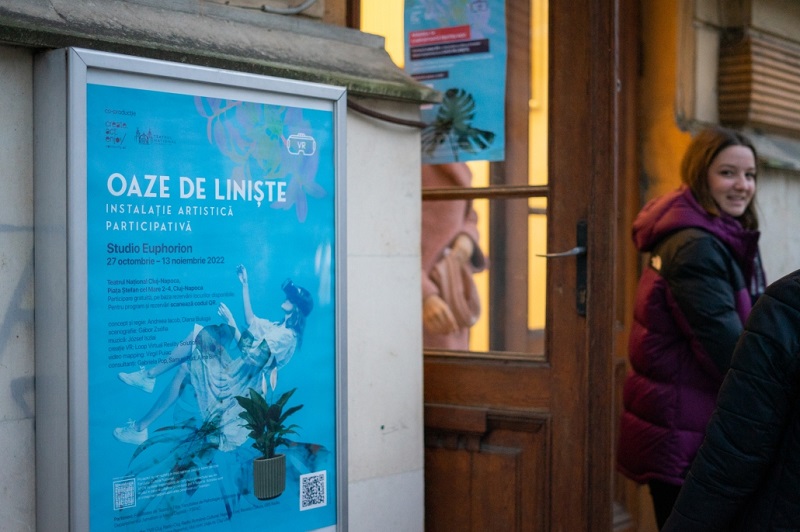
Oases of Silence was presented at the Euphorion Studio of the National Theatre of Cluj-Napoca, Romania, as a multisensory journey designed to immerse participants in both virtual and physical environments by using VR, interactive video mapping and soundscapes based on theta frequencies. With a duration of 15 minutes, it unfolded as a two-part individual experience: a journey through virtual reality (from a macro to a micro perspective on our immediate universe), followed by an interactive video mapping experience, through which the participants interacted with the digital images and sounds of plants physically present.
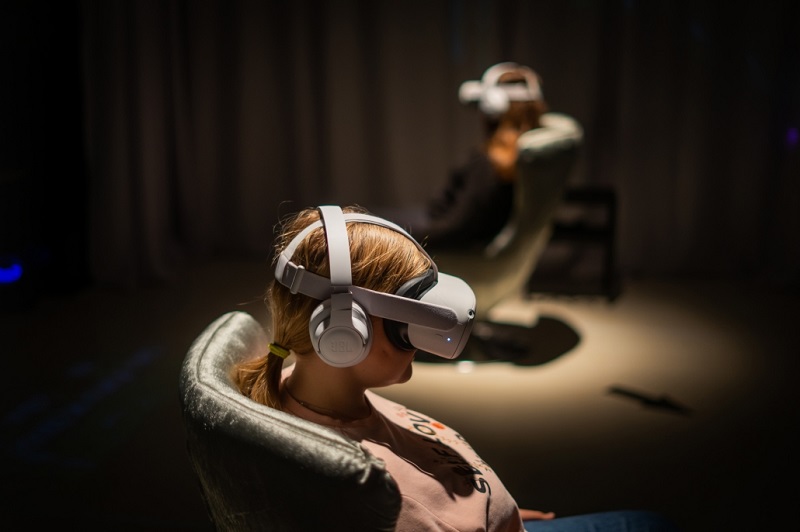
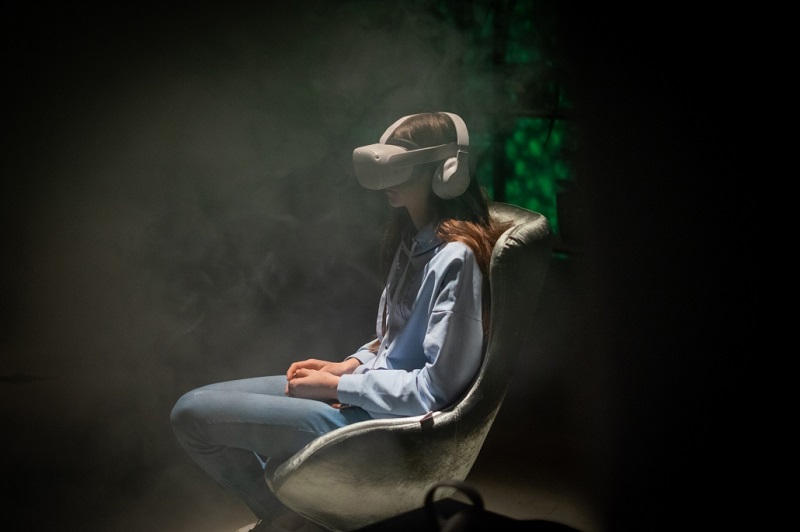
In the first part, audience members were equipped with Oculus headsets and headphones while seated in rotative chairs. They were virtually relocated to the entrance of the studio and then elevated above the city, observing panoramic views before beginning a gradual descent. This descent guided them towards a nearby tree, into the microcosm of a single leaf, and progressively deeper into cellular, atomic, and subatomic levels until reaching an abstract state of pure energy, marked by an intense flash of light signalling the end of this phase. Throughout this journey, participants listened to an original musical score composed for the installation, based on sounds tuned to the theta frequency range (4–8 Hz), in order to encourage deep relaxation and resonance with theta oscillations.
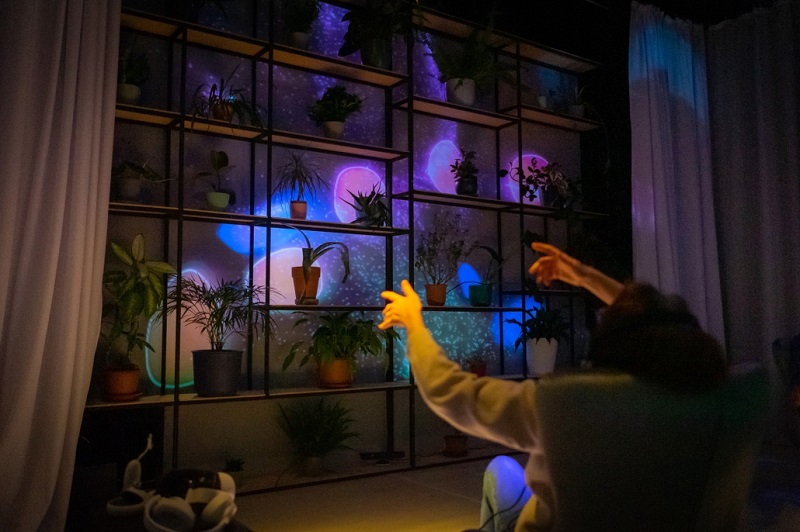
Upon removing the Oculus, participants entered the second part of the experience, for which the studio had been transformed into a hybrid physical-digital environment. Facing a wall arranged like a bookshelf filled not with books but with living plants, each participant was able to manipulate two spots of light—one with each hand—whose contact with the plants triggered pre-recorded musical responses derived from the same theta-based compositional principles. By directing the beams of light onto different plants, participants could activate and combine these sounds, effectively creating improvised concerts of layered tones. The participants were wearing headsets, so that they could each hear their own personal plant-concert.
Oases of Silence, a concept developed by the author in collaboration with Diana Buluga, was co-produced by the Create.Act.Enjoy Association and the National Theatre of Cluj-Napoca, Romania. The project assembled a multidisciplinary team: set design by Zsófia Gábor; original music composed by József Iszlai; VR design by Loop Virtual Reality; video mapping by Virgil Puiac; and poster design by Cristian Luchian. The installation benefited from the expertise of several consultants—Gabriela Pop and Samuel Bud (psychology), Alina Biro (biology), and Tunyagi Arthur (physics)—while the study conducted with participants was designed by Marina Dascăl (public health). Produced with the support of AFCN (Administration of the National Cultural Fund), the project was open to the public between October 27 and November 13, 2022. Institutional partners included the Faculty of Theatre and Film, the Faculty of Psychology and Educational Sciences, and the Department of Journalism and Digital Media – FSPAC, from Babeș-Bolyai University, Cluj-Napoca, Romania. Media partners were TVR Cluj, Radio România Cluj, Radio România Cultural, EBS Radio 90.4 FM, Napoca Live, Revista Cultura, Transilvania Reporter, The Woman, Cluj Life, B-Critic, cluju.ro, and cluj.com, ensuring broad dissemination and visibility for the project.
c. Participant Experience
Each participant engaged with Oases of Silence individually, ensuring a personal and immersive encounter with the installation. The experience was deliberately designed as multisensory, combining visual, auditory, and kinaesthetic elements to maximize engagement and facilitate relaxation. In the VR sequence, participants not only viewed expansive and microscopic landscapes but also listened to a specially composed soundtrack incorporating sounds tuned to theta frequencies, reinforcing the intended neurophysiological state. In the physical installation that followed, they interacted through movement, using their hands to direct beams of light onto plants, which in turn triggered pre-recorded theta-based sounds. This interactive design enabled participants to create unique auditory compositions, blending visual immersion, tactile control, and sonic feedback. The integration of these multisensory components sought to foster a sense of wonder, encourage deep focus, and support entry into the theta state.
Methodology
The study included N = 209 individuals who visited the Oases of Silence installation. The age distribution of the respondents was as such:
- 18–35 years: 71.4% (N = 147)
- 36–55 years: 25.7% (N = 53)
- over 55 years: 2.9% (N = 6)
Participants also provided demographic information (gender, education, income, marital status, and occupation) to contextualize stress-related outcomes. Regarding meditation practice frequency, 44.9% (n = 92) reported never or very rarely practicing meditation, 16,1% (n = 33) rarely, 26.8% (n = 55) practiced occasionally, and only 12.2% (n = 25) practiced frequently or very frequently. Familiarity with VR ranged from none (20%, n = 40) to slightly familiar (39,5%, n = 79 ), somewhat familiar (22%, n = 44), fairly familiar (13,5%, n = 27), and very familiar (5%, n = 10). In addition, most participants (64%, n = 130) reported attending cultural or artistic activities or events frequently or very frequently in 2022 (the year when the installation was presented), suggesting a high level of exposure to art and culture.
After the 15-minute individual journey within the installation, combining video projections, VR, and soundscapes composed based on theta frequencies, participants completed a questionnaire that included:
- Self-reported stress level during the past week (scale 1–10, where 1 means no stress or very little stress, and 10 means very high stress);
- questions regarding sources of stress (e.g., workplace);
- a brief validated screening scale for anxiety and depression symptoms (PHQ-4–Patient Health Questionnaire-4);
- sociodemographic and contextual data (meditation practice, VR familiarity, cultural consumption);
- stress levels immediately after the event, using the same numerical scale (1-10).
Stress level was measured on a numerical self-report scale from 1 (“no stress or little stress”) to 10 (“very high stress”). For interpretation, responses were grouped into two categories, a self-reported stress level between 1 and 5, and between 6 and 10.
Descriptive statistic reporting absolute numbers (n) and percentages were conducted on stress scores reported before and after the artistic experience, as well.
Results
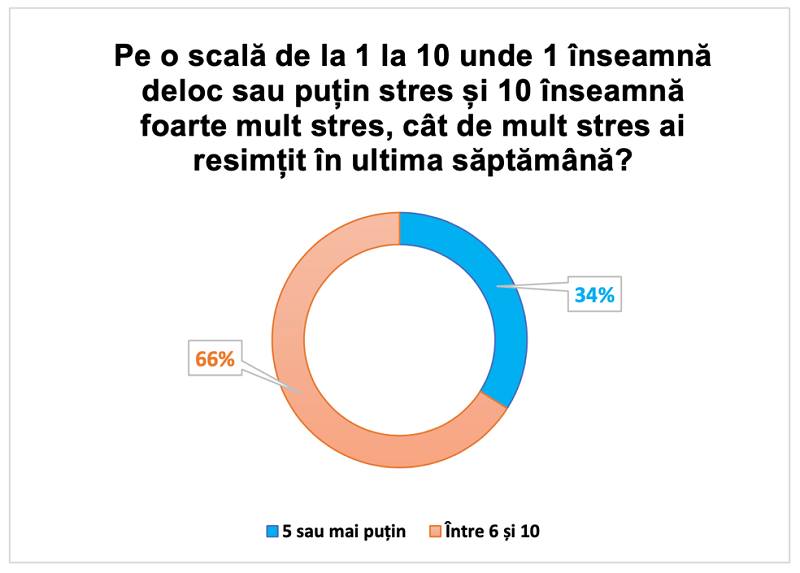
The average self-reported stress level for the sample was M = 6.42, SD = 2.27, with values ranging from 1 to 10. Analysis of baseline responses showed that most participants (66%, n = 135) reported high stress (scores between 6 and 10), while only 34% (n = 70) were in the low-stress category (1–5). This distribution indicates elevated stress levels in the week prior to the experience. The PHQ-4 scale measuring anxiety and depressive symptoms indicated that 38% reported mild symptoms, 24.4% moderate, 22.4% normal, and 15.2% severe.
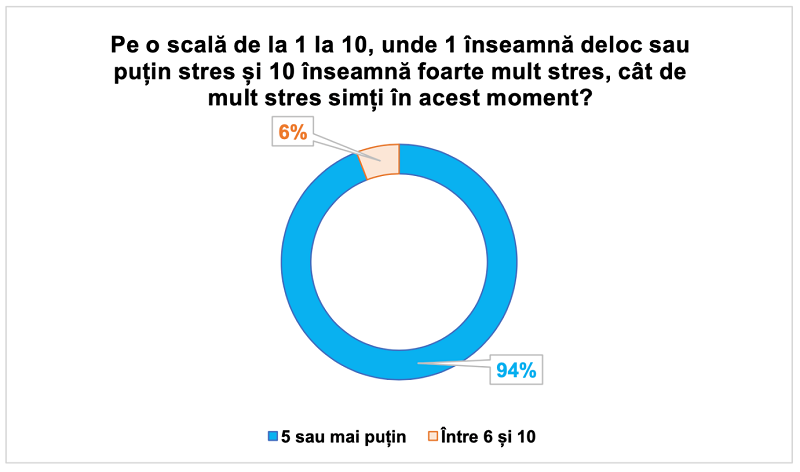
Following the Oases of Silence installation, the proportion of participants reporting low stress increased notably: 94% (n = 192) scored between 1 and 5, while only 6% (n = 12) reported high stress (6–10). We identified noticeable decrease in the average self-reported stress score reported prior and after the intervention.
Discussion
The findings of this study demonstrate that participation in Oases of Silence was associated with a marked reduction in self-reported stress levels, with the average score decreasing by approximately 60%. Based on the fact that the reported stress levels after the installation decreased and on the overall positive feedback, we can argue that immersive, multisensory art installations can considerably influence over the psychological states. The sequential design of the installation—guiding participants from expansive virtual environments to microscopic perspectives and finally into embodied interaction with responsive plants—appears to have created conditions conducive to relaxation and emotional release. These results align with research showing that immersive environments and aesthetic engagement can support stress relief and subjective well-being (Wang).
Although no direct physiological measures (e.g., EEG) were used in this study, the integration of auditory stimuli based on theta frequencies, alongside visual immersion and interactive elements, suggests a plausible correlation between the observed stress reduction and the induction of theta oscillations. Prior research has consistently demonstrated that theta activity is enhanced during states of relaxation, meditation, and exposure to music (Aftanas & Golocheikine; Tang et al.). The design of Oases of Silence explicitly incorporated these principles, combining soundscapes tuned to theta with immersive sensory input. The substantial reduction in stress observed in participants is consistent with outcomes typically associated with theta activation (Klimesch; Li et al.).
This interpretation also resonates with Marina Abramović’s artistic perspective. In her book, Marina Abramović Method. Instruction Cards to Reboot Your Life, she invites audiences to reflect on the liminal space “between wakefulness and sleep… a third state to which you can travel… where you are neither awake nor asleep” (Abramović xx). Such a description parallels neuroscientific accounts of the theta state, which itself bridges conscious and unconscious processing. By juxtaposing these artistic and scientific perspectives, the findings of this study highlight the potential of participatory art to open access to this liminal space and to facilitate its psychological benefits.
This study contributes to the growing interdisciplinary dialogue between digital art and neuroscience. While most existing research on theta induction focuses on internal practices such as meditation (Tang et al.) or external entrainment methods such as binaural beats (Wahbeh et al.; Gao et al.), fewer studies have examined the role of interactive art installations in modulating neural and affective states. By demonstrating that a multisensory artistic experience can lead to significant reductions in stress, Oases of Silence provides empirical support for the potential of participatory art to function as a tool for emotional regulation. This bridges two traditionally distinct fields, suggesting that digital art may be used not only for aesthetic purposes but also as a medium for enhancing mental well-being.
The primary limitation of this study lies in its reliance on self-reported stress levels, which, while informative, may be influenced by subjective bias, social desirability, or contextual factors. Moreover, the absence of direct neurophysiological data (e.g., EEG or heart rate variability) limits the ability to establish a causal link between the installation and theta activity. The findings therefore remain correlational and should be interpreted with caution. Additional limitations include the lack of a control group and the short-term nature of the assessment, which does not allow conclusions regarding long-term effects.
Future research should aim to integrate neurophysiological measures, such as EEG or fNIRS, to directly assess whether experiences like Oases of Silence induce theta oscillations. Incorporating neurofeedback could further enhance interactivity by allowing participants to actively modulate their brain rhythms within the artistic framework. Expanding the study to diverse populations, including clinical groups experiencing high stress or anxiety, could provide insight into therapeutic applications. Finally, longitudinal designs should be employed to evaluate the persistence of stress-reduction effects and the potential of repeated exposure to generate lasting changes in well-being.
Conclusions
The present study evaluated the impact of the interactive installation Oases of Silence on participants’ self-reported stress levels. Results indicated a substantial reduction in stress, with mean values decreasing by approximately 60% after the 15-minute immersive experience. The proportion of participants reporting high stress decreased from 94% before to 34% after the installation, suggesting a strong and consistent effect of the multisensory artistic intervention on subjective well-being.
Beyond its empirical outcomes, the project highlights the potential of digital art as a bridge between aesthetic creation and neuroscientific inquiry. By integrating VR, interactive video mapping, and soundscapes tuned to theta frequencies, Oases of Silence demonstrated how contemporary artistic practices can be designed with reference to cognitive and affective processes. From a scientific perspective, the results add to the growing body of evidence linking immersive experiences with relaxation and stress reduction. From an artistic standpoint, the installation expands the function of art from an expressive medium to an active tool for shaping mental states.
The findings point to promising directions for future research and practice. Participatory art installations such as Oases of Silence could be further developed to support mental health by fostering relaxation, emotional regulation, and creativity. Their accessible, non-invasive nature positions them as complementary interventions alongside more traditional therapeutic or mindfulness-based practices. With the integration of neurofeedback and the inclusion of physiological measures, future projects may both enhance user experience and provide direct evidence of neural modulation. Ultimately, this study suggests that interactive digital art has the potential not only to enrich cultural life but also to contribute meaningfully to mental well-being.
Acknowledgements: I would like to thank Marina Dascăl, who conducted and interpreted the study cited here, for her guidance and feedback. My deepest gratitude goes to Laura Berceanu and Eugen Wohl for their personal and professional support and encouragement throughout the writing of this article.
Bibliography
Abramović, Marina. The Marina Abramović Method: Instruction Cards to Reboot Your Life. Orion Publishing Group, 2022.
Aftanas, Larysa, and Sergey Golocheikine. “Human Anterior and Frontal Midline Theta and Lower Alpha Reflect Emotionally Positive State and Internalized Attention: High-Resolution EEG Investigation of Meditation.” Neuroscience Letters, vol. 310, no. 1, 2001, pp. 57–60.
Akbari, A., S. Zarei, K. Abdi, and F. Moradi. “Mental Health Preparedness and Response to Epidemics: A Qualitative Study.” BMC Public Health, vol. 24, 2004.
Başar, Erol, Ceylan Başar-Eroglu, Selda Karakaş, and Michael Schürmann. “Gamma, Alpha, Delta, and Theta Oscillations Govern Cognitive Processes.” International Journal of Psychophysiology, vol. 39, no. 2–3, 2001, pp. 241–248.
Bugos, Jennifer A., et al. “Music and Visual Art Training Increase Auditory-Evoked Theta Oscillations in Older Adults.” Brain Sciences, vol. 12, no. 10, 2022, article 1300, 27 Sept. 2022.
Bourriaud, Nicolas. Relational Aesthetics. Les Presses du Réel, 2002.
Buzsáki, György. “Theta Oscillations in the Hippocampus.” Neuron, vol. 33, no. 3, 2002, pp. 325–340.
Cahn, B. Rael, and John Polich. “Meditation States and Traits: EEG, ERP, and Neuroimaging Studies.” Psychological Bulletin, vol. 132, no. 2, 2006, pp. 180–211.
Colgin, Lisa L. “Rhythms of the Hippocampal Network.” Nature Reviews Neuroscience, vol. 17, no. 4, 2016, pp. 239–249.
Collins, Nick. Introduction to Computer Music. Wiley, 2009.
Enriquez-Geppert, Stefanie, René J. Huster, and Christoph S. Herrmann. “EEG Neurofeedback as a Tool to Modulate Cognition and Behavior: A Review Tutorial.” Frontiers in Human Neuroscience, vol. 11, 2017.
Fink, Andreas, and Mathias Benedek. “EEG Alpha Power and Creative Ideation.” Neuroscience & Biobehavioral Reviews, vol. 44, 2014, pp. 111–123.
Gao, Xuyuan, Hong Cao, Daqing Ming, Hong Qi, Xiaorong Wang, Xuejing Wang, and Ping Zhou. “Analysis of EEG Activity in Response to Binaural Beats with Different Frequencies.” International Journal of Psychophysiology, vol. 94, no. 3, 2014, pp. 399–406.
Grau, Oliver. Virtual Art: From Illusion to Immersion. MIT Press, 2003.
Herrmann, Christoph S., Ingo Fründ, and Daniel Lenz. “Human Gamma-Band Activity: A Review on Cognitive and Behavioral Correlates and Network Models.” Neuroscience & Biobehavioral Reviews, vol. 34, no. 7, 2010, pp. 981–992.
Kang, Jong-Man, et al. “Audiovisual Stimulation with Synchronized Pulsed Tones and Flickering Lights Set at a Delta Frequency Can Induce a Sedative Effect.” Korean Journal of Anesthesiology, vol. 61, no. 1, 2011, pp. 93–94.
Kjellgren, Anette, et al. “Altered States During Shamanic Drumming.” International Journal of Transpersonal Studies, vol. 29, no. 2, 2010.
Klimesch, W. “EEG Alpha and Theta Oscillations Reflect Cognitive and Memory Performance: A Review and Analysis.” Brain Research Reviews, vol. 29, no. 2–3, 1999, pp. 169–195.
Li, J., Y. Zhang, and S. Wang. “The Effects of Tai Chi Practice on Brain Activity: Evidence from EEG and fMRI Studies.” Frontiers in Psychology, vol. 13, 2022, article 844652. Frontiers Media SA.
López-Caballero, F., and C. Escera. “Binaural Beat: A Failure to Enhance EEG Power and Emotional Arousal.” Frontiers in Human Neuroscience, vol. 11, 2017.
Morganstein, Joshua C. “Preparing for the Next Pandemic to Protect Public Mental Health: What Have We Learned from COVID-19?” The Psychiatric Clinics of North America, vol. 45, no. 1, 2022, pp. 191–210.
Ramalho, Susana, et al. “Unveiling the Path to Resilience: Prioritizing Mental Health, Sleep, and Nutrition in the Post-COVID Era.” Healthcare, vol. 11, no. 17, 2023, article 2463, 4 Sept. 2023.
Schreiner, Leonhard, et al. “Brain–Computer Interface Driven Artistic Expression: Real Time Cognitive Visualization in the Pangolin Scales Animatronic Dress and Screen Dress.” Frontiers in Human Neuroscience, vol. 19, 2025, article 1516776.
Sumner, Rachel C., et al. “Mental Health and Resilience after the COVID-19 Pandemic: A Multi-Ethnic Longitudinal Survey in Singapore.” BMC Public Health, vol. 23, 2023.
Tang, Yi-Yuan, et al. “Central and Autonomic Nervous System Interaction Is Altered by Short-Term Meditation.” Proceedings of the National Academy of Sciences, vol. 106, no. 22, 2009, pp. 8865–8870.
Tsamakis, Konstantinos, et al. “COVID-19 and Its Consequences on Mental Health (Review).” Experimental and Therapeutic Medicine, vol. 21, no. 3, 2021, p. 244.
Vergani, Alberto Arturo. “Hans Berger (1873–1941): The German Psychiatrist Who Recorded the First Electrical Brain Signal in Humans 100 Years Ago.” Advances in Physiology Education, vol. 48, no. 4, 2024, pp. 878–881.
Wahbeh, Helané, Carla Calabrese, and Heather Zwickey. “Binaural Beat Technology in Humans: A Pilot Study to Assess Psychologic and Physiologic Effects.” Journal of Alternative and Complementary Medicine, vol. 13, no. 1, 2007, pp. 25–32.
Wang, Zhimeng, Yue Li, Jingchen An, Wenyi Dong, Hongqidi Li, Huirui Ma, Junhui Wang, Jianping Wu, Ting Jiang, and Guangxin Wang. “Effects of Restorative Environment and Presence on Anxiety and Depression Based on Interactive Virtual Reality Scenarios.” International Journal of Environmental Research and Public Health, vol. 19, no. 13, 2022, article 7878.

*Andreea Iacob is a Romanian theatre director and interdisciplinary artist whose work spans over 40 performances, installations, films, and events in both institutional and alternative spaces. She explores participatory processes and socially engaged art, combining performance, installation, technology, and community. She is an Assistant Professor at the Faculty of Theatre and Film, Babeș-Bolyai University, Cluj-Napoca, and founder of SHIFT – Transilvania Art Grup Association. Andreea has directed performances with inmates and participated in international projects. She holds a PhD in Theatre and degrees in Communication, Theatre Directing, Theatre Studies, and Journalism from Babeș-Bolyai University. Email: andreea.iacob@ubbcluj.ro.
Copyright © 2026 Andreea Iacob
Critical Stages/Scènes critiques, #33, June 2026
e-ISSN: 2409-7411

This work is licensed under the
Creative Commons Attribution International License CC BY-NC-ND 4.0.
