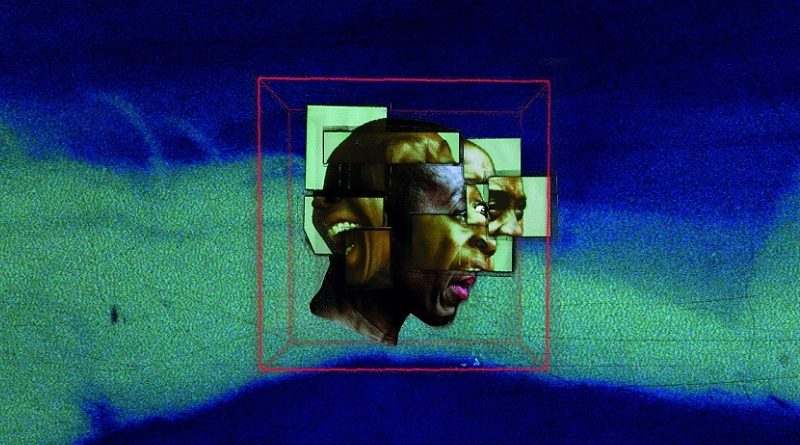
“Bridget is there”: Accelerating the Cybernetic Subject in Lauren Mooney and James Yeatman’s More Life
Richard Jordan*
Abstract
This article examines the accelerated dramaturgy of More Life (2025) by Lauren Mooney and James Yeatman through a posthuman lens. First produced at the Royal Court Theatre in London, Mooney and Yeatman’s text ironically foregrounds embodiment through taking a cybernetic approach to dramatic form: splitting its protagonist’s body and mind across two actors and manipulating the unfolding action to mirror the speed and simultaneity of concurrent computer processing. Cybernetic culture, according to Katherine Hayles, produces a subjectivity unique to the digital age, in which the human is defined by the logic of the intelligent machine, even within a biologically-unaltered present. Through accelerating the logic of the cybernetic subject, More Life interrogates the embodied implications of the transhumanist fantasy, by anchoring the play’s speculative plot in the materially felt consequences of the here and now.
Keywords: posthuman, drama, transhumanism, cybernetics, technology, acceleration
She’s not human anymore, whatever that was – but who is, these days?
(Mooney and Yeatman 119)
Since the end of the twentieth century, western drama has taken a posthuman turn. Where once dramatic theatre maintained a broad focus on “interpersonal relations” (Szondi 7), over the past three decades these relations have been increasingly extended outwards to include a range of organic and technological Others, re-contextualising human suffering within a more-than-human network. From the clones of Caryl Churchill’s A Number (2002) to the AI holograms of Jordan Harrison’s Marjorie Prime (2014), and even the elephant tusks at the centre of Lynn Nottage’s Mlima’s Tale (2018), theatre audiences around the world have displayed an increased willingness to embrace nonhuman characters on stage, in a tradition I have previously defined as posthuman drama (2014; 2021; 2026). Such plays critique the ethical and political consequences of technological acceleration by de-centring the human(ist) subject, employing instead a ‘cybernetic’ approach to dramaturgy.
Cybernetics is a computer science which equates humans, animals, and machines with “feedback loops” of information (Wiener 96). Out of cybernetic culture emerges, according to Katherine Hayles, a subjectivity unique to the digital age, in which the human is defined by the logic of the intelligent machine: forged in the shadow of a posthuman future, even within a biologically-unaltered present (Hayles 4). One of the primary means through which contemporary playwrights connote a cybernetic subjectivity is by taking an accelerated approach to time and space (an element I will refer to as dramaturgical spacetime).[1]
I use the term “spacetime” to signify that in dramatic playwriting, space and time function in unison with each other, in the same way that physicists (after Minkowski and Einstein) view each physical event as a “continuum” across four dimensions (Birx 1183). Additionally, Einstein’s special theory of relativity famously reveals that “neither matter nor information can propagate faster than light” (1094), providing a logical endpoint to the cybernetic cult of speed. Posthuman plays mirror this logic by taking an accelerated approach to unfolding events, while embedding an ironic tension between this logic and the frailty of human performance in real time. When combined with technological themes, an accelerated dramaturgy takes on political as well as aesthetic connotations, by revealing how technocapitalism conjures posthuman visions of the future that entrench existing power inequalities. Posthuman drama, then, is a twenty-first century dramatic tradition which interrogates the embodied implications of the cybernetic subject, through both everyday and speculative scenarios.
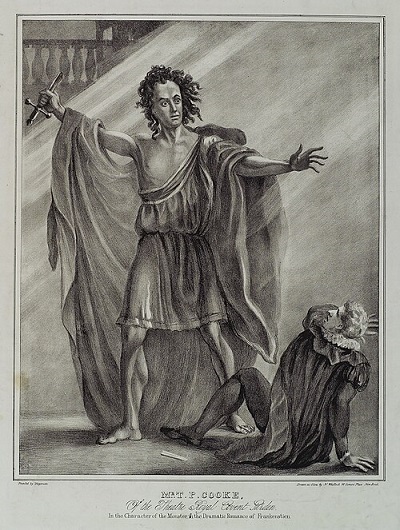
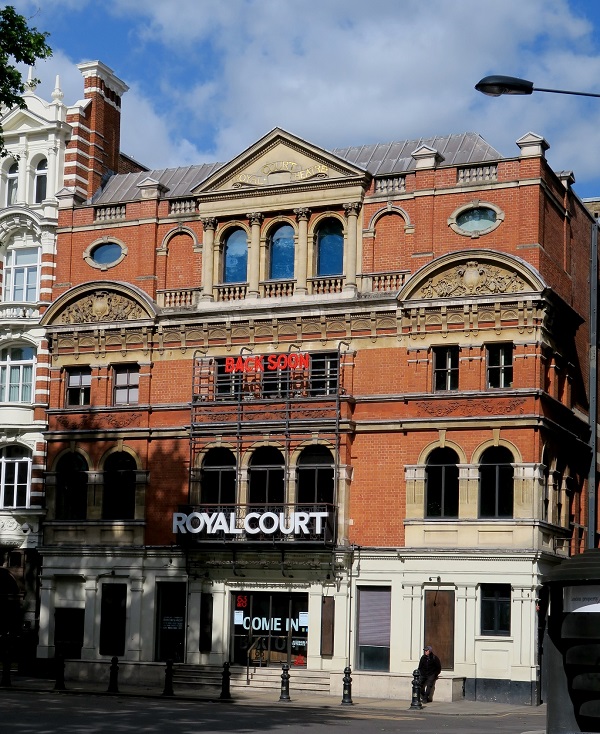
More Life (2025) by Lauren Mooney and James Yeatman[2] is a compelling recent example of this tradition. First produced through their company Kandinsky at the Royal Court Theatre in London, the play splits its protagonist’s mind and body across two actors, while manipulating the unfolding dramatic action to mirror the speed and simultaneity of concurrent computer processing. The plot focuses on Bridget, a woman killed by a driverless car at the age of 35 who wakes up 48 years later in a synthetic body, her brain having been preserved by a scientist called Victor (the Frankenstein parallels are clearly sign-posted) and uploaded into a digital consciousness. Horrified by her own revival, Bridget flees Victor’s laboratory and appears at her now-80-year-old husband Harry’s door, where he lives with his second wife, Davina. After initially trying to accommodate herself into their human world, Bridget’s presence in the house soon grows untenable, and she ultimately chooses to embark on a new life divorced from her past – before being transported back to her 35-year-old body, having anxiously imagined her posthuman fate. Yet rather than simply representing the posthuman, Mooney and Yeatman interrogate it at a formal level. Through splitting Bridget across two actors who appear simultaneously (Bridget and Past Bridget), and by artificially accelerating the plot’s unfolding dramatic action, More Life foregrounds the centrality of embodiment for human subjectivity: bringing human and posthuman perspectives into a revealing tension with one another.
Simulating the Future
The cybernetic subject of digital culture appears at one end of the posthuman debate. Transhumanism appears at the other: a futurist philosophy which champions the capacity for science and technology to “transcend current human capabilities” (Onishi 103). In his famous essay “The Transhumanist FAQ,” Nick Bostrom speculates on a range of possible posthuman forms, including the prospect of “uploading”: a process of “transferring an intellect from a biological brain to a computer” (9). Bostrom argues that such a development would enable significant life extension, including the potential to eradicate ageing and death itself (14). Bostrom’s ideas are similar to those outlined in Hans Moravec’s Mind Children (1988) and Max More’s “Principles of Extropy” (2003), while transhumanist philosophy more broadly has enjoyed significant interest and promotion from Silicon Valley tech barons in recent years (Thomas). Yet while transhumanists view such a future as “inevitable” (Ross 3), for critical posthumanists, the impact of technological acceleration on the human(ist) subject warrants urgent and ongoing critique, including its materially-felt consequences in the present day (Herbrechter et al 17).

In How We Became Posthuman, Katherine Hayles mounts a compelling case against the “upload” hypothesis, arguing that removing cognition from the human body would transform the nature of thought itself:
Embodiment makes clear that thought is a much broader cognitive function depending for its specificities on the embodied form enacting it. This realization, with all its exfoliating implications, is so broad in its effects and so deep in its consequences that it is transforming the liberal subject, regarded as the model of the human since the Enlightenment, into the posthuman. (xiv)
For Hayles, this process of unifying human with machine is already embedded within cybernetic culture, which configures the human “so that it can be seamlessly articulated with intelligent machines” (3). Since Hayles’ observations in 1999, this subjectivity has only accelerated further, reinforced by a pervasive cultural discourse in which humans are routinely equated with intelligent machines. The substitution of human for machine cognition can be found in the language of digital gaming (McMillan 2), artificial intelligence (T. Carlson 138), psychology and brain chemistry (Brette 1), and postmodern identity politics (Halberstam and Livingston 3), among many other fields, as well as mainstream media coverage of bio-technologies such as mind-controlled prosthetic limbs (Down). Together, these developments comprise what Nidesh Lawtoo has described as a form of “mimetic posthumanism” (1), in which human and machine have become conflated through “a relational affective force” that “troubles the boundaries of individuation” (8).
Yet despite how normalized this rhetoric has become, it remains highly contested within the field of neuroscience, with many experts describing it as a “reductionist view of cognition” (Brette 1). Indeed, neurobiologist Michael Hendricks makes this false equivalence clear: “biological systems are not like computers” (Down). The co-opting of cyborgic metaphors to describe biological realities has thus created a form of Baudrillardian simulacra: a gap between ‘real’ and ‘hyperreal’ perceptions of the human mind and body (Gamez 1).
Combining these ideas with a materialist perspective, a cybernetic subjectivity emerges as a product of capitalist discursive practices: promoting the human’s capacity to be “seamlessly articulated” (Hayles 3) with intelligent machines, including the global capitalist machine which produces and enables them. For Ross Abbinnett, the posthuman is a by-product of “the performative ethos of neoliberalism” (182), noting “the way we develop as transhuman beings is essentially related to the demands of efficiency, resilience, self-reliance, and adaptability that are placed upon us by the systems into which we are integrated” (178-79). Furthermore, for Abbinnett: “[Ray] Kurzweil’s feeling that ‘the singularity is near’ […] is partly due to the power of [neoliberal] systems to simulate the future and to weave it into our aesthetic experience of the present” (184). The logic of the posthuman, then, while based on a speculative fantasy, has materially-felt implications in the present day, which the embodied realm of dramatic theatre is uniquely positioned to interrogate. More Life achieves this primarily through its acceleration of spacetime: speeding up the logic of the present-day cybernetic subject.
The Politics of Speed
CHORUS 2. She lives
CHORUS 5. She lives for / years
CHORUS 6. Years and years and years
CHORUS 5. She lives
CHORUS 4. And lives
CHORUS 2. And goes on living. (Mooney and Yeatman 118)
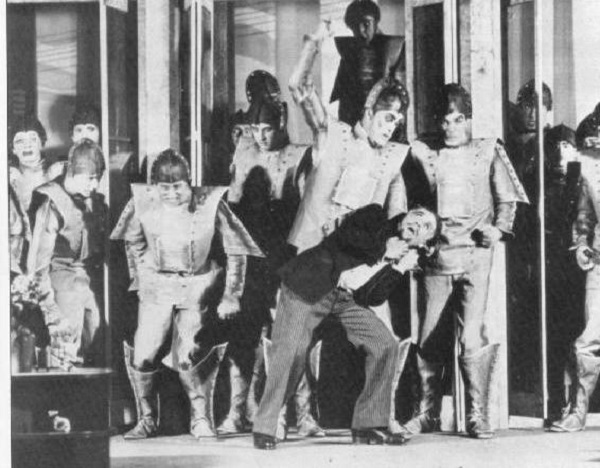
Temporal manipulation is an ancient dramaturgical practice: from Greek playwrights compressing tragic plots “into a single daylight period” (Aristotle 6 1449b13), to the time-jumping acts and scenes of Shakespeare, Ibsen, and Chekhov. By the early twentieth century, “the malleability of space and time” (Wajcman 55) had become a key focus for a range of modernist artists, in part inspired by the proliferation of mass electricity, the scientific break-throughs of Albert Einstein (1905; 1915), and the fiction of H. G. Wells (The Time Machine; The New Accelerator). In the theatre, the speed-embracing spectacles of the Italian futurists sought to wreak “a violent assault on the nerves of […] spectators” (Berghaus 8), while expressionist playwrights’ fear of the machine was accelerated into a satirical future in Karel Čapek’s dystopian comedy Rossum’s Universal Robots (1921).
Acceleration was also central to the dramaturgy of George Bernard Shaw’s Back to Methuselah (1920), which envisioned a race of advanced superhumans. Across five acts, the play develops Shaw’s theory of “Creative Evolution,” racing through spacetime from the Garden of Eden to the twentieth, twenty-second, and thirtieth centuries, before ending “As Far As Thought Can Reach” in the year 31,920 AD (117). Written in response to what Shaw viewed as a nihilistic culture of “neo-Darwinism” (3), the play substitutes Christian faith with a propelling “Life Force” (25), which allows humans to extend their life spans by thousands of years. Matthew Yde observes that Shaw’s utopian vision ironically “presents a totalitarian world in which all that is messy disappears […] The human body is becoming ethereal, and it is intimated or at least hoped that we will soon be leaving the body behind as we become vortices of pure Thought” (118). While the pre-digital posthumans of Back to Methuselah do not align with a cybernetic subjectivity, the play is nonetheless a harbinger of many of the preoccupations of our current age, particularly its framing of the instability of the “human condition” across vast passages of spacetime. Like his futurist peers, Shaw deployed acceleration as a dramaturgical tool to reveal the present in a new light.

In this respect, modernist theatre makers were among the first to examine the politics of speed. Acceleration is a natural occurrence, present at both molecular and cosmic levels; in physics, the term refers to “the rate of change in velocity with respect to time” (Cleveland and Morris). Yet as a feature of western modernity, acceleration is more precisely linked with industrialisation. While earlier technological developments had altered human perceptions of time incrementally (such as sailing ships, mechanical clocks, and horse-drawn carriages), the industrial revolution facilitated a rapid expansion of steam transportation and production in the early nineteenth century.
Judy Wajcman identifies the invention of the telegraph in the 1830s as a key turning point, through its capacity to transport messages “at speeds dramatically different from those that had previously existed” (27). While capitalist investors in these technologies inherently valued developments that saved time and improved efficiency, this rapid pace of change had a profound cultural impact. As Hartmut Rosa argues, “the entire cultural history of modernity to the present day can be interpreted […] as a reaction to a changed experience of time and space” (35). By the 1970s, Paul Virilio had coined the term dromology (from the Greek word dromo, meaning “to race”) to study speed and its political implications more closely.
Virilio viewed technological acceleration as an impetus of the global military-industrial complex, within which “speed, the cult of speed, is the propaganda of progress” (qtd. in Wajcman 32). For Virilio, a society obsessed with speed ultimately ushers in “the end of the proletariat” (Virilio 115) with far-reaching political consequences, including, as Judy Wajcman has surmised, “a shortening of time limits and time to think” (34). Virilio’s thesis echoes a famous passage in The Communist Manifesto, where Marx observes how rapid technological change allows those in power to shift social conventions on their own terms: “All that is solid melts into air, all that is holy is profaned” (qtd. in Rosa 47).[3] As global industry has shifted from the physical to the virtual, so too has an accelerated cybernetic culture spawned “a new temporality” (Wajcman 24), with just as profound implications for human subjectivity, as well as its representation through dramatic form.
In the postmodern era, Caryl Churchill has perhaps been the most celebrated architect of accelerated dramaturgy, building upon Brecht’s epic theatre to frequently depict human characters navigating more-than-human time scales and cultural forces. The first act of Cloud 9, for example, focuses on a British family and their servants in Victorian Africa, while in the second act, set in 1970s London, “a hundred years have passed, but for the characters only twenty-five years” (ii), divorcing the Colonial project from human-scale temporality. Similarly, in The Skriker (1994), a monstrous creature borne of the earth’s destruction plunges two working class women into an underworld that does not obey the laws of human time, reflecting the inequitable effects of capitalism on the poor and vulnerable (Amich 396).
A prevailing spatio-temporal fluidity can likewise be observed in the work of more contemporary playwrights, many of whom are also concerned with the effects of globalised capitalism, including Ella Hickson (Oil), Lucy Kirkwood (Chimerica), Debbie Tucker Green (stoning mary), Lynn Nottage (Mlima’s Tale), Alistair MacDowell (Pomona; X), and Stefano Massini (The Lehmann Trilogy). In an analysis of the work of MacDowell, Kirkwood, and Tucker Green, Alex Ferrone describes the compression of time and space in these plays as emblematic of what he terms “capitalist dramaturgy”, whereby a play’s dramatic structure “reveal(s) how deeply the regulatory mechanisms of capitalism structure contemporary lived experience” (93). The increased prominence of such plays, for Ferrone, exhibits:
a remarkable theatrical translation of the political, economic, and cultural forces that have been in operation since the end of the Second World War. If time–space compression is the hallmark feature of global capitalism and flexible accumulation, its recurring dramatisation speaks to the dizzying ubiquity of capital in our daily lives. (132)
In the more precise realm of technologically-mediated capitalism, Seda Ilter likewise locates a “mediatized dramaturgy” in a series of postmodern plays since the 1990s, including Martin Crimp’s Attempts on Her Life, Simon Stephens’ Pornography, Churchill’s Love and Information, and Mark Ravenhill’s Faust (Faust is Dead). For Ilter, the fragmented, non-linear structure of these plays serves to disrupt the “sensible order” of contemporary media-drenched societies, through undermining many of the Aristotelian principles of dramatic theatre (35), and instead evoking a “culture of screens, short attention spans [and] fast-paced lives” (xii). Building on Churchill’s legacy, the political dimensions of time-space compression in much contemporary drama reflects an ongoing relationship between temporal perception and dramatic form, as playwrights respond dynamically to the technological and cultural changes which surround them (11-2).
While More Life shares some similarities with these plays and traditions, Mooney and Yeatman uniquely deploy the tool of acceleration within a transhumanist context, harnessing the language of a “sensible” present-day cybernetic subjectivity to both represent and critique this paradigm from within.[4]
Mimesis has long been a central goal of western dramatic playwriting (M. Carlson 588). Aristotle famously defines tragic poetry as “a mimesis of an action that is admirable […] performed by actors, not through narration” (6 1449b22–8). While mimesis has been problematized for over fifty years in theatre scholarship – including through the postdramatic lens of Hans-Thies Lehmann – this has not prevented dramatic playwrights from pursuing its potential. In the case of More Life, despite its posthuman protagonist, it is notable that the play was devised with and written for an entirely human ensemble, and – to date – has only been performed by human actors (Mooney).[5] While the primary focus of this article is on More Life’s textual dramaturgy, the human mimetic context which informed its creation remains vital for assessing its meaning on the page. Through splitting Bridget across two actors’ bodies, and by artificially accelerating its dramatic action, More Life foregrounds the centrality of embodiment for human subjectivity, while simultaneously anchoring its speculative plot in the materially-felt consequences of the unfolding present.
Accelerated Dramaturgy in More Life
….we are cutting between scenes which in reality are not happening in the same time or place.
(Mooney and Yeatman “Note on the Text” 2)
A focus on time and technology has long been a feature of Kandinsky, the company through which Mooney and Yeatman produce their work. Initially formed in 2005, Kandinsky’s current model emerged in 2015, when Yeatman, fresh from an apprenticeship with Complicité, began collaborating with Mooney on a series of shows about historical events, including the Hong Kong serial dog killer (Dog Show), the history of social housing (Trap Street), and the origins of the Luddite rebellion (There is a Light That Never Goes Out). In 2022, their play The Winston Machine brought the past and present together, jumping backwards and forwards in spacetime to examine the ongoing impact of World War II on contemporary British life (Morgan). This temporal fluidity is accelerated further in More Life, a play Mooney was inspired to write after encountering Elise Bohan’s 2022 book Future Superhuman, in which Bohan outlines a mission to “address – or end – what [she] calls ‘the tragedies of reality: ageing, sickness, and involuntary death’” (Mooney). Mooney then took the idea to Yeatman, who together began to investigate the field of transhumanism more deeply, eventually locating a “spectrum” of believers, from “cyber-goths […] sewing their Oyster card chips into their palms” at one end, to “huge amounts of money and power” at the other (Mooney). The pair began to conceive a scenario that might traverse this spectrum, through a collaborative development process – “improvising, writing, sticking scenes together” (qtd. in Morgan) – with Mooney taking the lead on text and Yeatman with the ensemble. In this way, a dynamic interplay between text and embodiment emerged early on in the play’s creation. As Mooney explains:
Th[e] transhumanist desire to actively escape the corporeal was interesting to us. Theatre is a medium of the body – it’s live, physical and about bodies watching other bodies in rooms. […] this Cartesian insistence on a self separate from the body felt rich with narrative possibilities, and the story flowed from there.

The Royal Court season continued this focus on the corporeal, foregrounding a separation of body and mind through transforming six performers into 21 characters, both human and posthuman alike. For reviewers, this more-than-human fluidity was mostly well-received: while Aleks Sierz described the play as a “Posthuman Tragedy [that] fails to come alive,” others deemed it “incredibly human” (Wyver), “richly satisfying” (Wolf), and “ultimately compelling” (Lukowski). For Sam Marlowe at The Stage, the play had a contemporary resonance, describing its “provocative what-ifs” as comprising “a striking, open-ended contemplation of the kind of world we may already be in the process of creating.” Kate Wyver at The Guardian further praised the production’s foregrounding of embodiment, noting that it “illuminate[s] what we lose in conquering immortality, and reveal[s] a kind of wonder in these saggy, exhausted, ravenous meat sacks of ours.” As a “blueprint” (Worthen 8) for that performance, the play text for More Life can be seen to foreground embodiment at a text-based level, through accelerating the logic of cybernetics within its dramatic form.
The mind-body split of the play’s protagonist is initially framed through the inclusion of a Chorus, which accelerate the plot backwards and forwards across spacetime, while simultaneously grounding the action in the present day. Six Chorus members are listed in the dramatis personae, and allocated individually-numbered lines throughout, framing the beginning and ending, and appearing at key moments throughout. In the Prologue, the Chorus begins by telling the story of Italian physicist Giovanni Aldini, who attempted to revive a dead body through electrification in 1803 (Mooney and Yeatman 4). A few scenes later, the Chorus narrates a cinematic vision of the future: “Wide shot of a cityscape pouring with rain” (25). However, they stumble occasionally, as individual members disagree on specific details:
5. There are roads in the sky.
4. No
5. Yeah. Sky-roads.
4. No, there wouldn’t be roads. There wouldn’t be cars. […]
3. It’s a city. I think we should agree that it’s a city
2/5. Yeah.
4.. Yeah but is the sky still blue? (Mooney and Yeatman 24)
For Matt Wolf, reviewing the Royal Court production, the Chorus emerged as “joint witnesses – architects, even – of what in some circles might be seen as advances and in others as a cry from the futuristic frontline…”. Sam Marlowe similarly viewed the Chorus as being “like a roomful of writers,” pitching a future which may or may not come to pass. For Andrzej Lukowski, the Chorus’s “actually-maybe-it-happened-another-way worldbuilding sometimes [felt] frustratingly uncommitted.” Yet in presenting the Chorus’s narration as speculative rather than omniscient, Mooney and Yeatman serve to frame the accelerated action within the parameters of the unfolding theatrical event. They are both here and there. This ontological uncertainty is enhanced through the “Note on Doubling” (3), in which the playwrights indicate their intended approach to casting, doubling each Chorus member with the prominent roles of Bridget, Past Bridget, Harry, Victor, Davina, and Victor’s assistant Mike, as well as a slew of named and unnamed robots (3). With the exception of Victor,[6] each of the Chorus roles is thus designed to double as both human and posthuman characters, creating an environment in which mind and body, flesh and code are interchangeable.
More Life further deploys a cybernetic approach to character by splitting its protagonist across two actors. In the Royal Court programme which precedes the play text, Past Bridget is listed as Ghost Bridget (i). Yet in the published dramatis personae that follows, “Ghost” is replaced with “Past” (2). This is an important distinction which frames my analysis of Bridget’s character. Through describing human Bridget as “Past,” the play text frames her subjectivity in temporal rather than supernatural terms: past and future Bridget become one subject, joined together in a cyborgic union across temporal planes. This acceleration between past and future bodies is most vividly depicted through the play’s several lip-syncing sequences, initially through a montage of other potential posthumans that “fail” at the first hurdle, as Victor attempts to find an uploaded consciousness that will be open to accepting their new robot body:
CHORUS 1 becomes the ROBOT and stands in the space with VICTOR. Everyone else is gathered round the edge, each at a microphone.
The project is to upload different scanned brains to the ROBOT, to see if they function. Each new speaker is voiced by the indicated chorus member into a mic, while 1/ROBOT lip-syncs. (Mooney and Yeatman 7)
As the Chorus rotates through different uploads, the same robot body attempts to unite with the voice of the dead human speaking: nine failures altogether. Finally, on the tenth attempt, the ROBOT lip-syncer is replaced with BRIDGET:
This feels different.
4/PAST BRIDGET speaks. 1/BRIDGET lip-syncs.
PAST BRIDGET: like spicy foods. I like to cook. I’m a teacher. I’m married. We live in the city. I sleep badly at night…(Mooney and Yeatman 15)
After Victor encourages Bridget to connect her mind to her new body – “Think about putting one leg in front of the other” (17) – she finds she can now speak without lip syncing. Yet when she states her anxieties about her posthuman condition, these anxieties are accompanied by “Chorus 4 [played by Past Bridget] breathing harder, almost hyperventilating” (19), performing a humanity to which Bridget no longer belongs. The scene ends with Victor exiting the laboratory, leaving Bridget to comprehend her new reality: “She is alone with the body” (39).
While Bridget can now speak for herself, Past Bridget returns at key moments in the play, signalling a shared, ongoing sense of being temporally “out of joint” (Hamlet 1.5.188). In Act 2, scene 2, an unseen Past Bridget talks to Davina at the kitchen table, yet Davina only sees the lip-syncing Bridget, to whom she generously calls “family” (74). Their conversation before this has been breezy and distant – Davina learns that Bridget doesn’t sleep and is never hungry – yet as soon as the two connect more deeply, Past Bridget must step in. Conscious of the heavy subtext between them, she tells Davina (via Bridget): “I appreciate it. Letting me stay” (74). Unlike the superficial chatter which preceded it, this type of statement, the play suggests, requires a yearning to be understood, human-to-human; dependent on the “specificities of the embodied form enacting it” (Hayles xiv). Elsewhere in Act 2, Past Bridget appears in a more conventional, memory-play manner, as Harry speaks with the wife he remembers, while Bridget watches on (89). By play’s end, Bridget’s conscious decision to continue living for “years and years” (118) is thwarted by Past Bridget back in 2025, who has anxiously imagined this potential future while scrolling her phone in the dark (120). When young Harry asks Past Bridget to turn off her phone, he receives a response from the present and future simultaneously:
BRIDGET(S) Sorry. (121)
Both Bridgets are thus present in this moment, with Bridget emerging as a figment of Past Bridget’s speculative fears, yet nonetheless exerting a materially-felt force on her present reality. Subsequently, she dissolves into the final Chorus narration, which describe her night-time anxieties in the third person. In this moment, a new kind of disembodiment takes place, in which Past Bridget is no longer physically represented, but simply described by multiple agents. Her mind and body are thus once again separated as the play ends, foregrounding a cybernetic logic which prizes language over embodiment, and conjuring a past and future which (re)create each other.
A cybernetic subjectivity is further signified through the play’s accelerated approach to dramatic action. Alongside conventional spacetime-jumps – such as scene changes, sound cues, and “Cut to” stage directions, which jump forward in a linear progression – the text is also notable for its use of the algorithmic “+” symbol to connote multiple actions happening simultaneously. A comparison between the temporal function of “Cut to” in Act 2, scene 2, and the “+” symbol in Act 2, scene 5, illuminates these differences. In the former – titled “A New Day” – Bridget attempts to integrate herself into a typical day in Davina’s life (despite being 80, both Davina and Harry’s bodies have the appearance and functionality of what we might perceive as 50-year-olds today, due to life-enhancing “injections” (78)). Across a series of “Cut to” scenarios, Bridget watches Davina eat breakfast (74), attend an exercise class (77), and apply moisturising cream (77), as well as engage in a series of conversations about the past 48 years. With each jump in spacetime, there is a clear sense that the plot is moving forward in a linear fashion through the course of Davina’s day. Yet a few scenes later, Act 2, Scene 5 depicts conversations unfolding across multiple times and spaces – between Past Bridget and Harry; Bridget and Davina; and Bridget and Harry – providing a randomised series of snapshots which reveal how the trio are navigating Bridget’s presence:
DAVINA. What’s wrong with having a nice house?
BRIDGET. Nothing. I just meant
DAVINA. What?
+
HARRY. Two weeks ago. The most ordinary – pick the most ordinary day. And tell me what we did
BRIDGET Harry
+
BRIDGET. Where is everyone, Davina? Everyone I knew. They’re all dead. All of them.
DAVINA. You want to know what happened?
BRIDGET. Harry wouldn’t tell me, not exactly. I mean, he said it was bad. He said
+
PAST BRIDGET. You made spaghetti Bolognese. You were meant to go to football. Your five-a-side. (Mooney and Yeatman 100)
While the montages of the “Cut to” scenes suggest a linear temporality, the “+” symbol scenes conjure multiple temporalities at once, much in the same way “concurrent” computer programming “progress[es] two or more activities in parallel” (Butterfield, Ngondi, and Kerr). Alongside characterisation, then, More Life also takes a cybernetic approach to dramatic action, imbuing the plot – and spacetime itself – with the logic of the intelligent machine.
Neither Here, Nor There
As this article has demonstrated, much of More Life’s accelerated dramaturgy is predicated on perception: on whether Bridget or Past Bridget is present in her posthuman body; on how the future may or may not unfold; on how technology affects experiences of temporality. While I have focused on the play’s construction of character and plot, Mooney and Yeatman are not averse to deploying more conventional devices – such as dramatic irony – for examining cybernetic perception. In Act 2, scene 6, Harry and Davina are having an argument about Bridget, but do not initially realise she is present in the room:
HARRY. You’re the one who wanted her to stay. You’re the one who said we had / a duty, a
DAVINA. Yes, but I didn’t mean forever. What happened to
Taking legal advice? Allowing her to
HARRY. No, no
BRIDGET is there. DAVINA can see her, HARRY can’t.
DAVINA. Harry. (Mooney and Yeatman 106-107)
The stage direction “BRIDGET is there” emphasises Bridget’s uncanny machinic silence: one moment of many in which a viewing audience must pretend that the actor playing Bridget is not breathing (49). Crucially, as a posthuman she is not consistently perceived as a subject at all by Harry and Davina; both are primarily motivated to honour the memory of Past Bridget. The reverse is also true. When Bridget tells Harry that she misses him, he reassures her, saying “I’m right here”, to which she clarifies: “I don’t mean you. I mean […] Him” (108). It is a moment of profound posthuman alienation, demonstrating the absurdity of the transhumanist goal of prolonging that which is temporally and bodily bound. Bridget is neither here, nor there. Through accelerating embodiment, More Life offers audiences the chance to reflect on the materially-felt consequences of becoming posthuman – in the here and now.
Endnotes
[1] I discuss the four main dramaturgical features of posthuman plays – machinic language, networked character, distributed agency, and accelerated spacetime – in more detail in my monograph Posthuman Drama: The Cybernetic Subject in Twenty-First Century Playwriting (Palgrave Macmillan 2026).
[2] In the Royal Court programme, “text and dramaturgy” is credited to Mooney, while direction is credited to Yeatman (i), yet the devised, collaborative process behind the work – and the dual-name author’s credit which appears on the title page of the published playtext – indicates that both artists shaped the dramaturgical structure of the work together, on the page and on the development floor. Posthuman Drama: The Cybernetic Subject in Twenty-First Century Playwriting (Palgrave Macmillan 2026).
[3] Ironically, Marx has inspired several movements over the past 50 years which embrace acceleration to destroy capitalism from within. “Accelerationist” philosophy – nascent in the work of Deleuze and Guattari in the 1970s and developed further by Benjamin Noys in the 2000s – argues that embracing the rapid acceleration of capitalism could help to facilitate its own destruction (Mackay and Avanessian 6-14). Confusingly, an opposite use of the term is also in circulation, with British philosopher Nick Land championing his own “accelerationism” as an inevitable advancement towards a technological future, writing provocatively: “what appears to humanity as the history of capitalism is an invasion from the future by an artificial intelligent space that must assemble itself entirely from its enemy’s resources” (qtd. in Gamez 31).
[4] Several other posthuman plays also feature temporal acceleration, such as Manjula Padmanabhan’s Harvest, Caryl Churchill’s A Number, Jordan Harrison’s Marjorie Prime, Nick Payne’s Elegy, and David Farr’s A Dead Body in Taos, yet do so episodically, i.e. by accelerating (or reversing) time between scenes rather during the unfolding action.
[5] The robot drama of Oriza Hirata provides one potential model of a more literal posthuman theatre to come. It is entirely possible that Bridget may one day be performed by a robot actor – yet the human context guiding her creation and premiere performance remains a vital element on the page.
[6] Interestingly, this unique doubling for Victor aligns with the rigid separation between “scientist” and “creation” implicit in Shelley’s famous critique of scientific materialism (Hogsette 535).
Bibliography
Abbinnett, Ross. The Neoliberal Imagination: Politics, Aesthetics, and Economics in the Evolution of Hyper-Industrial Capitalism. Routledge, 2020.
Amich, Candice. “Bringing the Global Home: The Commitment of Caryl Churchill’s The Skriker.” Modern Drama, vol. 50, no. 3, 2007, pp. 394–413.
Aristotle. Aristotle’s Poetics. Translated and with a commentary by George Whalley, McGill-Queen’s UP, 1997.
Berghaus, Gunter. Italian Futurist Theatre 1909–1944. Oxford UP, 1998.
Birx, H. James. Encyclopedia of Time: Science, Philosophy, Theology, & Culture. SAGE, 2009.
Bostrom, Nick. “The Transhumanist FAQ: A General Introduction.” Transhumanism and the Body, edited by Calvin Mercer and Deerek F. Maker, Palgrave, 2014 [2003], pp. 1–17.
Brette, Romain. “Brains as Computers: Metaphor, Analogy, Theory or Fact?” Frontiers in Ecology and Evolution, vol. 10, 2022, pp. 1–5.
Butterfield, Andrew, Gerard Ekembe Ngondi, and Anne Kerr, editors. A Dictionary of Computer Science. Oxford UP, 2016.
Carlson, Marvin. “Postdramatic Theatre and Postdramatic Performance.” Brazilian Journal on Presence Studies, vol. 5, no. 3, 2015, pp. 577–95.
Carlson, Thomas. The Indiscrete Image: Infinitude and Creation of the Human. U of Chicago P, 2008.
Churchill, Caryl. Cloud Nine. Pluto Press, 1979.
———. The Striker. Calder and Boyars, 1971.
Cleveland, Cutler J., and Christopher Morris, editors. “Acceleration.” Dictionary of Energy, 2nd ed., Elsevier, 2015.
Down, Aisha. “Investors’ ‘Dumb Transhumanist Ideas’ Setting Back Neurotech Progress, Say Experts.” The Guardian, 10 Nov. 2025.
Ferrone, Alex. Stage Business and the Neoliberal Theatre of London. Palgrave Macmillan, 2020.
Gamez, Patrick. Posthumanism Meets Surveillance Capitalism. Palgrave, 2025.
Halberstam, Jack, and Ira Livingston, editors. Posthuman Bodies. Indiana UP, 1995.
Hayles, N. Katherine. How We Became Posthuman. U of Chicago P, 1999.
Herbrechter, Stefan, Ivan Callus, Megan de Bruin-Molé, Marija Grech, Christopher John Müller, and Manuela Rossini. “Critical Posthumanism: An Overview.” Palgrave Handbook of Critical Posthumanism, edited by Stefan Herbrechter, Ivan Callus, Megan de Bruin-Molé, Marija Grech, Christopher John Müller, and Manuela Rossini, Palgrave Macmillan, 2022, pp. 1–22.
Hogsette, D. S. “Metaphysical Intersections in ‘Frankenstein’: Mary Shelley’s Theistic Investigation of Scientific Materialism and Transgressive Autonomy.” Christianity and Literature, vol. 60, no. 4, 2011, pp. 531–59.
Ilter, Seda. Mediatized Dramaturgy: The Evolution of Plays in the Media Age. Bloomsbury, 2021.
Jordan, Richard. “Digital Alchemy: The Posthuman Drama of Adam J. A. Cass’s I Love You, Bro.” Australasian Drama Studies, vol. 65, 2014, pp. 37–52.
———. “Distributed Agencies in Dramatic Form: A Posthuman Perspective on Lucy Prebble’s The Sugar Syndrome and Sarah Ruhl’s Dead Man’s Cell Phone.” Modern Drama, vol. 64, no. 1, 2021, pp. 1–23.
———. Posthuman Drama: The Cybernetic Subject in Twenty-First Century Playwriting. Palgrave Macmillan, 2026.
Lawtoo, Nidesh. “Mimetic Posthumanism: An Introduction.” Mimetic Posthumanism, edited by Nidesh Lawtoo, Brill, 2025, pp. 1–36.
Lukowski, Andrzej. “Review: More Life.” Time Out London, 12 Feb. 2025.
Mackay, Robin, and Armen Avanessian. “Introduction.” #Accelerate#: The Accelerationist Reader, edited by Robin Mackay and Armen Avanessian, Urbanomic, 2017, pp. 1–46.
McMillan, Callum T. F. Posthumanism in Digital Culture. Emerald, 2021.
Marinetti, Filippo Tommaso. “The Founding and Manifesto of Futurism.” Translated by R. W. Flint, Italian Futurism, Jessica Palmieri, 2007–2025 [1909].
Marlowe, Sam. “More Life Review.” The Stage, 13 Feb. 2025.
Mooney, Lauren, and James Yeatman. More Life. Nick Hern Books, 2025.
Mooney, Lauren. “First Person: Writer Lauren Mooney on Bringing Bodies Together in the New Royal Court Play, More Life.” The Arts Desk, 6 Feb. 2025.
More, Max. Principles of Extropy. Version 3.11, Extropy Institute, 2003.
Morgan, Fergus. “Kandinsky Theatre: ‘There Are Millions of UK Theatres for New Writing but Only One for New Company Work… It’s Crazy.’” The Stage, 12 Jan. 2022.
Moravec, Hans P. Mind Children: The Future of Robot and Human Intelligence. Harvard UP, 1988.
Onishi, Bradley B. “Information, Bodies, and Heidegger: Tracing Visions of the Posthuman.” Sophia, vol. 50, no. 1, 2011, pp. 101–12.
Rosa, Hartmut. Social Acceleration: A New Theory of Modernity. Translated by Jonathan Trejo-Mathys, Columbia U P, 2013.
Ross, Benjamin. The Philosophy of Transhumanism: A Critical Analysis. Emerald, 2020.
Shaw, George Bernard. Back to Methuselah. Project Gutenberg, 2004 [1921].
Sierz, Aleks. “More Life, Royal Court Review – Posthuman Tragedy Fails to Come Alive.” The Arts Desk, 15 Feb. 2025.
Szondi, Peter. Theory of the Modern Drama. Edited and translated by Michael Hays, Polity, 1987.
Thomas, Alexander. “Transhumanism: Billionaires Want to Use Tech to Enhance Our Abilities – the Outcomes Could Change What It Means to Be Human.” The Conversation, 17 Jan. 2024.
Virilio, Paul. Speed and Politics. Translated by Marc Polizzotti, Semiotext(e), 2006.
Wajcman, Judy. Pressed for Time: The Acceleration of Life in Digital Capitalism. U of Chicago P, 2015.
Wiener, Norbert. Cybernetics, or Control and Communication in the Animal and the Machine. 2nd ed., Wiley, 1961.
Wolf, Matt. “‘More Life’ Review – A Quietly Riveting, and All-Too-Human, Sci-Fi Drama Which Excitingly Subverts Expectation.” London Theatre, 14 Feb. 2025.
Worthen, William B. Drama: Between Poetry and Performance. Wiley, 2010.
Wyver, Kate. “More Life Review – Death-Cheating Tech Drama Is Incredibly Human.” The Guardian, 13 Feb. 2025.
Yde, Matthew. Bernard Shaw and Totalitarianism: Longing for Utopia. Palgrave, 2013.

*Richard Jordan is a playwright and Senior Lecturer in Theatre and Digital Performance at the University of New England (Australia). His scholarly research has appeared in Modern Drama, Australasian Drama Studies, and CounterText, and his plays have garnered several awards and honours, including the Australian Theatre Festival NYC Best New Play Award (The Tiniest Thing, 2020), Queensland Premier’s Drama Award (25 Down, 2009), The Lord Mayors’s Award for Best New Australian Work (Macina, 2015), and a Creative Fellowship at the MacDowell Colony, New Hampshire (2013). His monograph, Posthuman Drama: The Cybernetic Subject in Twenty-First Century Playwriting (Palgrave Macmillan, 2026) examines a series of plays from the past 30 years that explore the political and ethical consequences of technological acceleration.
Copyright © 2026 Richard Jordan
Critical Stages/Scènes critiques, #33, June 2026
e-ISSN: 2409-7411

This work is licensed under the
Creative Commons Attribution International License CC BY-NC-ND 4.0.
