
Armenia Puts its Epic on Stage
Anna Grigorievna Asatryan* and Margarita Kamalyan**
David of Sassoun. Based on the Armenian epic David of Sassoun. Literary adaptation of the epic: Hayk Hambardzumyan․Music: the ethno-electro group Hog Artun. Choreography: Mariam Aslanyan. Choirmaster: Narine Voskanyan. Scenography: Arthur Durgaryan. Project Creator, Main Director: Gosh Sargsyan. Premiere at Alexander Spendiaryan National Academic Opera and Ballet Theatre, Yerevan, Armenia, 18 and 19 December 2025. (As of January 2026, David of Sassoun has been incorporated into the theatre’s repertoire.)
The creation of the ballet-oratorio David of Sassoun (Sasuntsi David), at the initiative of Yerevan Mayor Tigran Avinyan, and its production at the Alexander Spendiaryan National Academic Opera and Ballet Theatre, marked a revival of the Armenian national epic spirit in the country’s contemporary cultural life; further, it inaugurated the genre of the ballet-oratorio in Armenian music.
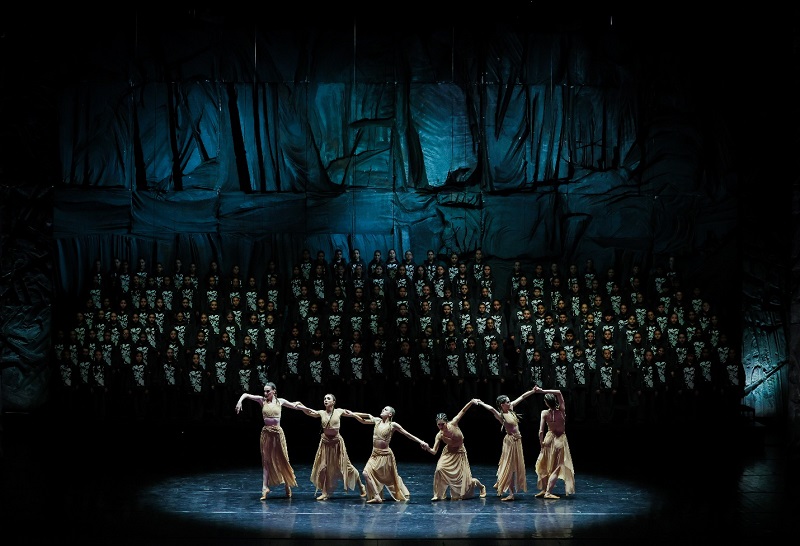
The ballet‑oratorio genre, relatively rare in the contemporary repertoire, synthesizes elements of both ballet and oratorio. In this hybrid form, the choreographic element is closely interwoven with vocal performances (by soloists and choir) to narrate a dramatic or heroic-epic storyline. The result is not an opera (where all the dialogue is sung) nor a traditional oratorio (concert singing). Instead, it is a unified work in which dance and musical expression jointly propel the dramatic action. The libretto is based on an adaptation of the Armenian epic by the scholar Hayk Hambardzumyan, specifically for this production.
The medieval Armenian epic David of Sassoun conveys the struggle of the heroes of Sassoun (a region in historical Armenia, located in present-day Turkey) against Arab invaders. The epic was composed between the eighth and tenth centuries.
Owing to the magnificent sculpture by the eminent Armenian sculptor and People’s Artist of the USSR, Yervand Kochar, which stands in the square adjacent to the railway station in Yerevan, David of Sassoun has also become one of the principal symbols and iconic landmarks of the Armenian capital.
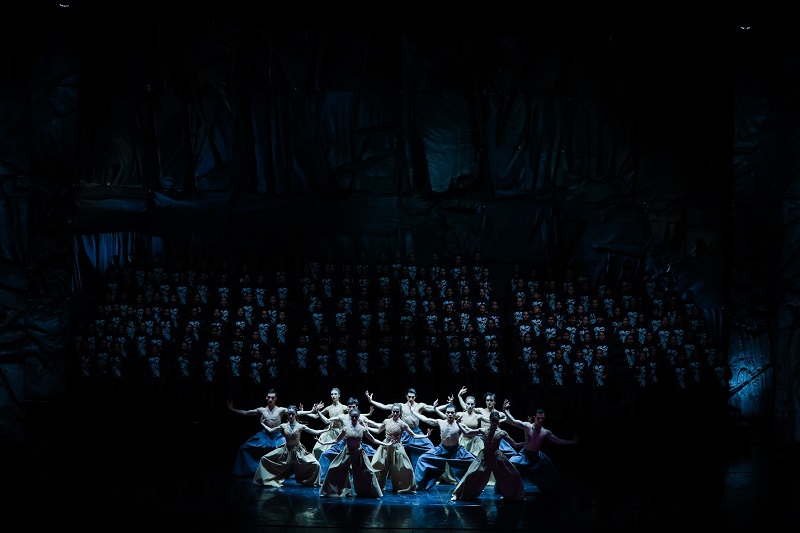
The ballet-oratorio encompasses the entire epic, tracing a journey through four generations of heroes (the “branches”):
- Sanasar and Baghdasar (The Birth of Sassoun): The story begins with the miraculous birth of the twin brothers from water. The scenes depict the founding of the Sassoun fortress and the dawn of the struggle for freedom. In choreography, this is often expressed through imagery of the water element and monumental construction.
- Mher the Elder (Lion-Mher): A sequence of scenes revealing the character of David’s father. The centrepiece is the legendary single combat with a lion: Mher tears the predator’s jaws apart with his bare hands, earning his epithet. This triumph of spirit and physical prowess is conveyed through expressive, athletic choreography.
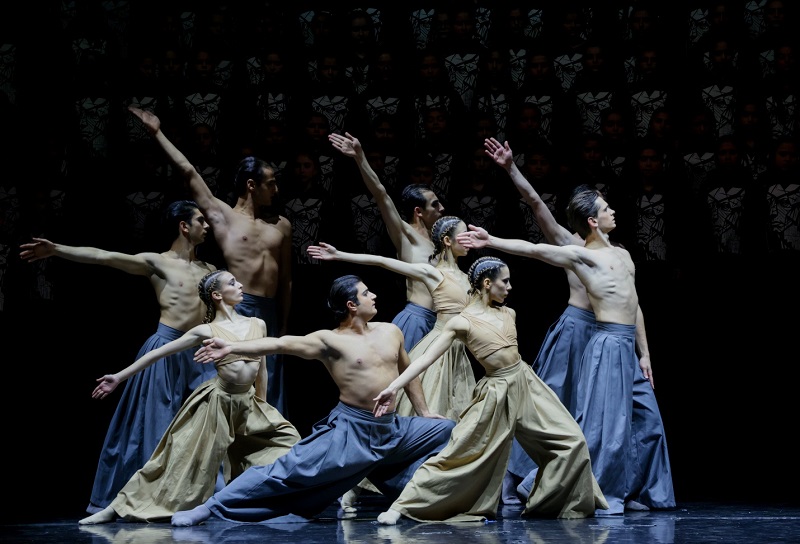
- David of Sassoun (The Central Sequence): The most extensive section of the performance, covering the key milestones in the hero’s life:
- Childhood in Misir: David grows up at the enemy’s court, displaying a defiant spirit from an early age.
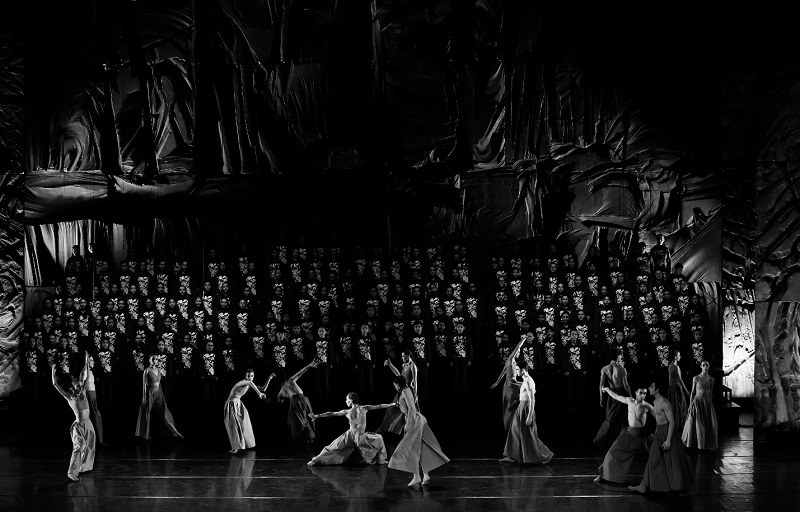
- David the Shepherd: A series of pastoral scenes featuring comic elements and the chiming of bells.
- Restoration of Maruta Monastery: A symbol of Sassoun’s spiritual rebirth.
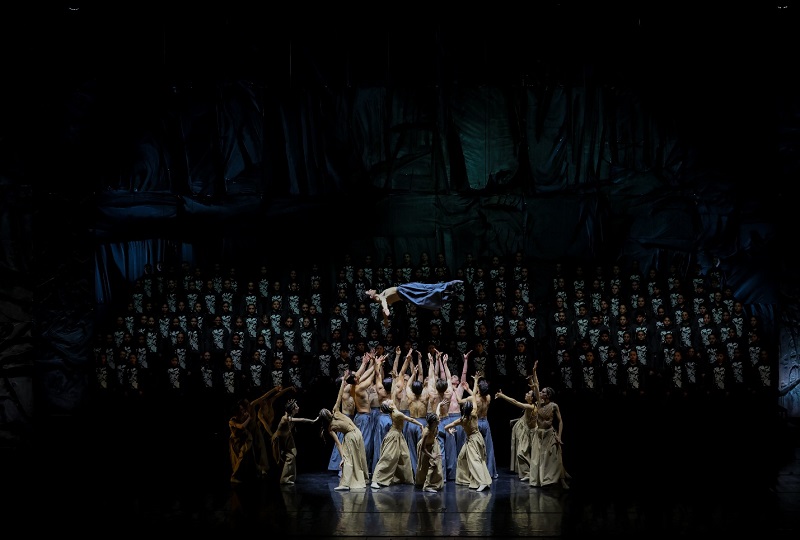
- The Battle with Msra Melik: The climactic duel between Light and Darkness. The conflict is emphasized by a system of leitmotifs and the clash of the hero’s polar “musical languages.”
- Marriage to Khandut: A lyrical storyline where dance becomes the embodiment of love and devotion.
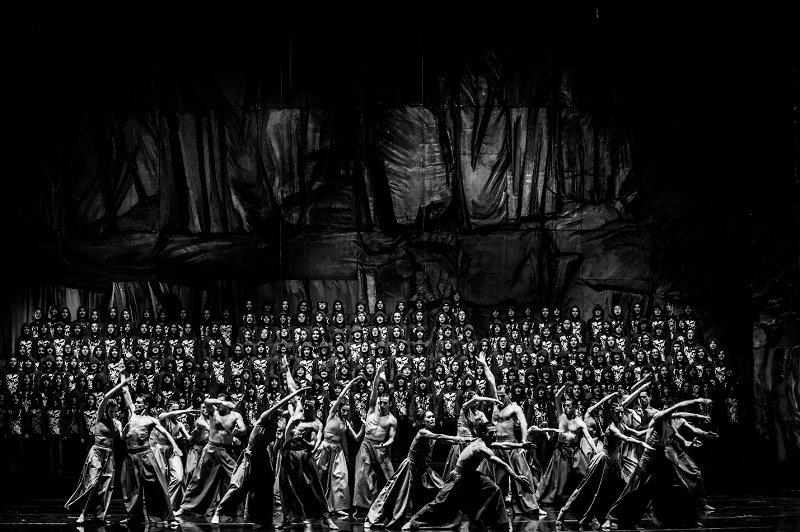
- Mher the Younger: Departure into Eternity The final section of the performance, imbued with profound symbolism. Disillusioned by the injustices of the world, Mher the Younger retreats into the silence of Agravakar (the Raven’s Rocks). This voluntary exile is an anticipation of a new era, when the earth will regain its strength and “the grain shall grow larger than a walnut.” The finale leaves the audience in a state of hope and philosophical reflection.
Thus, the narrative of the ballet-oratorio unfolds as an epic journey from creation (the founding of Sassoun), through struggle and triumph (the heroic deeds of David), to profound philosophical anticipation (the departure of Mher the Younger).
The third branch, David of Sassoun, is the peak of the performance. It is here that the narrative reaches its highest dramatic tension, fully revealing the synthesis between the production’s expressive body language and its “archaic sound.”
The battle between David and Msra Melik is conceived not as a straightforward duel, but as a confrontation between two musical and plastic elements. Through a system of leitmotifs, the authors contrast David’s organic, “earthy” intonation with Melik’s mechanistic and ponderous sound.
At moments of peak intensity, the children’s choir joins the performance. The live voice, piercing through electronic rhythms, becomes the embodiment of “spiritual labor,” transforming a historical battle into a mystical ritual. Here, the body language of the performers becomes exceptionally eloquent. The dancers do not merely mimic a fight; rather, through sharp, athletic movements, they transmit the very energy of the awakening earth—the “archaic sonority” that serves as the conceptual foundation of the production.
In this performance, the ancient yet ever-relevant Armenian epic has been expressed for the first time through a modern sonic palette, thereby melding tradition with modernity. The music, with a contemporary electronic approach, created by the ethno-electro group Hog Artun (Garik Gagikyan and Arthur Alek Kosbekyan), combines the intonational features of national melodies with new technological advances.
The original epic also incorporates sung sections. However, the composers of the ballet-oratorio opted for creating entirely new music. They managed to achieve a vividly expressed Armenian national colour and an archaic sonority through adept utilisation of the intonational peculiarities of Armenian folk music and the timbres of Armenian folk musical instruments. A sophisticated system of leitmotifs is deployed, with each hero being endowed with their own musical language and thematic bridges, created across the space, serving to make the performance’s dramaturgical structure more cohesive.
In this piece, the conventional elements of the ballet-oratorio genre—symphonic music, solos (arias, recitatives) and powerful choral sections—are replaced with electronic music and individual performers. The composition is interpreted by Hogh, Arthur Alek, Jeanne Davtyan (vocals), Artem Manukyan (cello), Harutyun Chkolyan (wind instruments) and Grigor Davtyan (percussion).
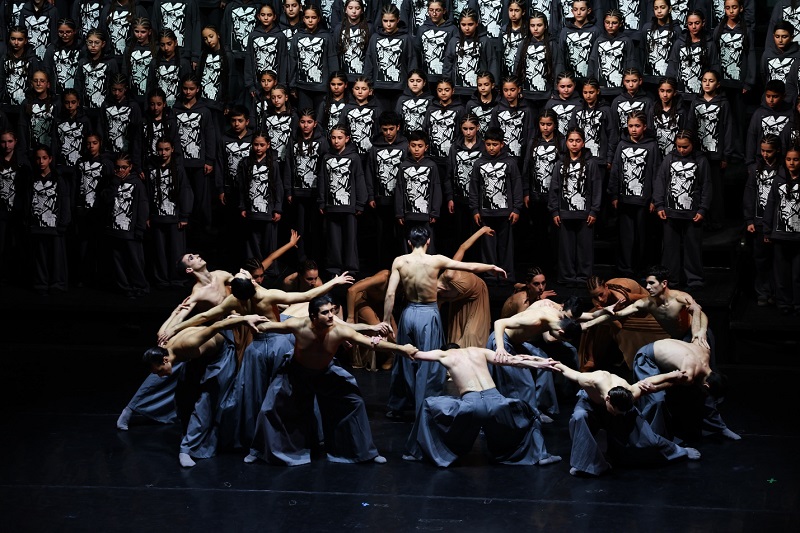
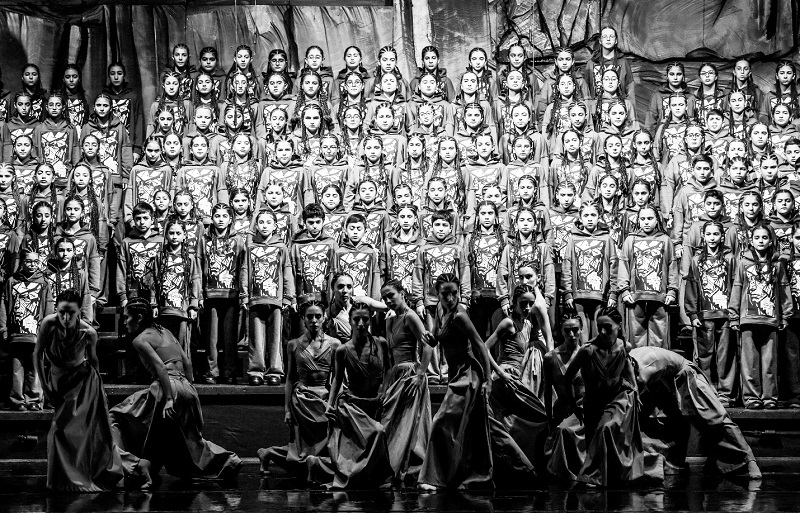
The organic blend of tradition and innovation was also present in the choreographic incarnation of the epic. The ballet troupe of the A. Spendiaryan National Academic Opera and Ballet Theatre participated in the production, under the direction of the ballet master Mariam Aslanyan. The production reflected the key features of contemporary choreography, namely freedom of movement, emphasis on the “dance of the soul” and deep work with the body—the use of gravity, work with breathing, amplitude and parterre technique.
The artists’ gestures materialized the rhythms of plastic images. The combination of emotional, descriptive and regulatory gestures created a unique aesthetic of communication between ballet dancers and the audience. Gestures became a conduit for the characters’ inner world. Leveraging the potential of modern choreography, the ballet troupe’s artists transformed each movement into a universal language, where the completeness of gesture gave birth to visual art that could be understood without words.
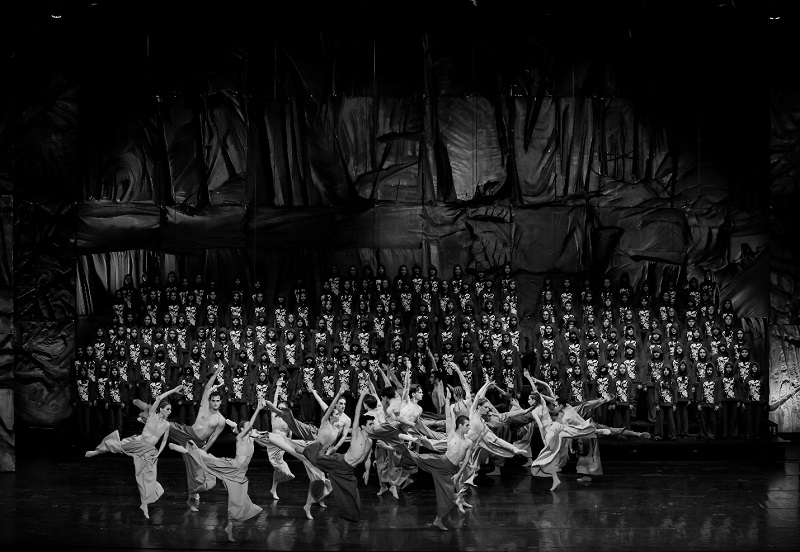
The performance’s highlight was the children’s and youth ensemble choir, comprising four hundred pupils from Yerevan’s music and art schools, under the artistic direction and baton of Narine Voskanyan. The children spent the entire duration of the show, 95 minutes, on stage, performing the rather complex (especially rhythmically) vocal parts from memory. These children are the artists and audience of the Opera Theatre of tomorrow. Many of them were standing on the prestigious stage of the Opera Theatre for the first time in their lives. The audience’s standing ovation will be indelibly etched in their memory.
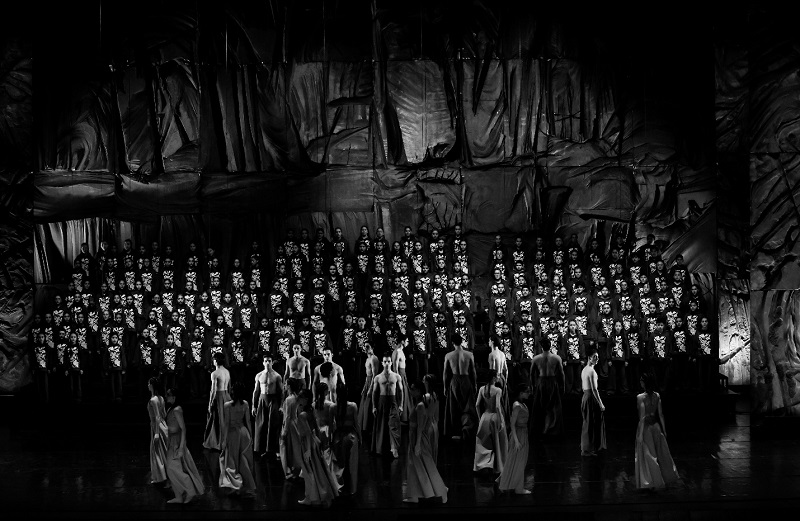
The stage design by the artist-sculptor Arthur Durgaryan was impressive, featuring colossal, 80-piece decorations covering 500 square metres, a majestic depiction of the Land of Sassoun.
Note 1: The project was implemented under the leadership of Gosh Sargsyan, Head of the Culture and Tourism Department of the Yerevan Municipality. It incorporates a social dimension as well. As of December 18, 2025, merchandise featuring imagery of the epic heroes—David of Sassoun, Khurkik Jalali and Tsovinar—has been available for purchase, with the proceeds allocated towards supporting children with cancer.
Note 2: Finale of the ballet-oratorio. Video: Fast News – Culture.
*Anna Grigorievna Asatryan is the Director of the Institute of Arts of the National Academy of Sciences of the Republic of Armenia and Head of the Department of Music. She is a Doctor of Sciences (Arts), Professor, Honored Art Worker of the Republic of Armenia. Her scientific interests include the history and theory of Armenian music in the XIX-XXI centuries. Asatryan is the author of 12 monographs and around 270 scholarly articles. She is a board member of both the Union of Theatre Workers of Armenia and the Union of Composers of Armenia. anna.asatryan@arts.sci.am, https://orcid.org/0009-0009-0814-4870․

**Margarita Kamalyan is a senior researcher and the Scientific Secretary at the Institute of Arts of the National Academy of Sciences of the Republic of Armenia. She earned her Bachelor’s and Master’s degrees from Yerevan State University Faculty of History and Theory of Armenian Art. She holds a PhD in Arts (2014). Kamalyan has authored numerous articles and participated in national and international conferences in Armenia, the UK, Italy and Russia. Her interests include Armenian Fine Arts, particularly Armenian Diasporic art of the XX century, with a special focus on French-Armenian and Italo-Armenian stage and costume design, painting, and more. margaritakamalyan@gmail.com, https://orcid.org/0009-0009-0880-5317.
Copyright © 2026 Anna Grigorievna Asatryan, Margarita Kamalyan
Critical Stages/Scènes critiques, #33, June 2026
e-ISSN: 2409-7411

This work is licensed under the
Creative Commons Attribution International License CC BY-NC-ND 4.0.
