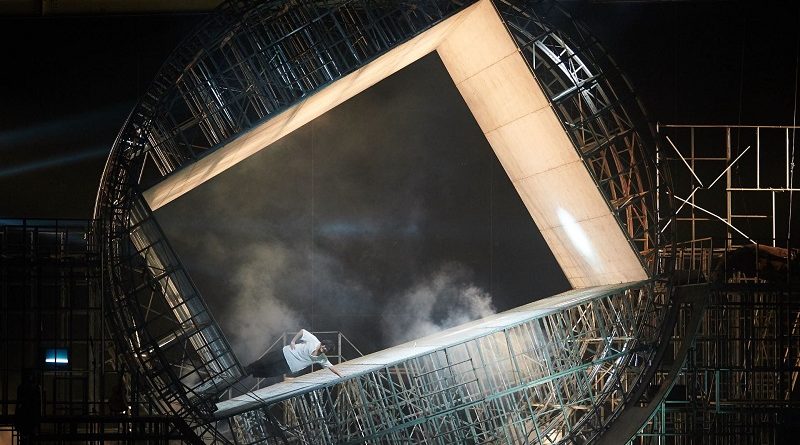
From East Berlin to a Beijing Teahouse: A Conversation with Dramaturg Sebastian Kaiser
Chaomei Chen*
Sebastian Kaiser’s career traces a distinctive trajectory through the landscape of post-dramatic theatre. Born in East Berlin, he served as a dramaturg at Volksbühne am Rosa-Luxemburg-Platz from 2008 to 2017, contributing to more than thirty productions with directors including Frank Castorf and Vegard Vinge & Ida Müller. During this period, he curated large scale political and artistic initiatives, among them “Africa Conference – 130 Years of the Berlinisation of a Continent,” and collaborated with the trans-European movement Democracy in Europe Movement 2025. He later served as Artistic Director of the International Art and Performance Festival Balaklava Odyssey, staged within former military facilities in Crimea.
Since 2018, Kaiser has shifted his focus toward a dynamic transnational collaboration with Chinese directors Meng Jinghui and Chen Minghao. In 2022, he founded the Artistic Intelligence Network, an international platform bridging performance, theory, video and fine arts. The above intercultural collaborations have produced significant works such as Teahouse (2018-2019) and Red and Black (2021)with Meng, as well as more recent adaptations of Goethe’s Werther (2024) and Lu Xun’s short story collection Nahan (Call to Arms) (2025), in collaboration with students in Nanjing. He also had guest performances in Wuzhen from 2014 to 2024. He has taught at the FU Berlin, University of Music and Theatre Leipzig, Oslo National Academy of the Arts and was Visiting Scholar at the Segal Center of the CUNY, New York. Since 2020, he has been a guest Professor at the Central Academy of Drama in Beijing and at the Nanjing University.
This interview, conducted in January 2024, explores Kaiser’s journey from the political turbulence of post-reunification Germany to the avant garde stages of contemporary China. It examines how his background at the Volksbühne informs his intercultural dramaturgy and how narratives of history, revolution, and upheaval translate across the cultural divide between Berlin and Beijing.
Chaomei Chen: Sebastian, it is a pleasure to connect with you. I am so grateful that Professor Claire Conceison introduced me to you via my current visiting research supervisor, Rossella Ferrari, at the University of Vienna. Your recent collaborations with Meng Jinghui, particularly in Teahouse and Red and Black, have introduced a distinct dramaturgical texture to the Chinese stage. However, since your departure from the Volksbühne in 2017, there has been a gap in public information regarding your trajectory. Given that the aesthetics of the Volksbühne and Frank Castorf are central to your practice, could you trace the path of your theatrical education and your transition into other cross disciplinary projects? I am also aware that you worked on several film productions. How does that contribute to your theatrical aesthetics?
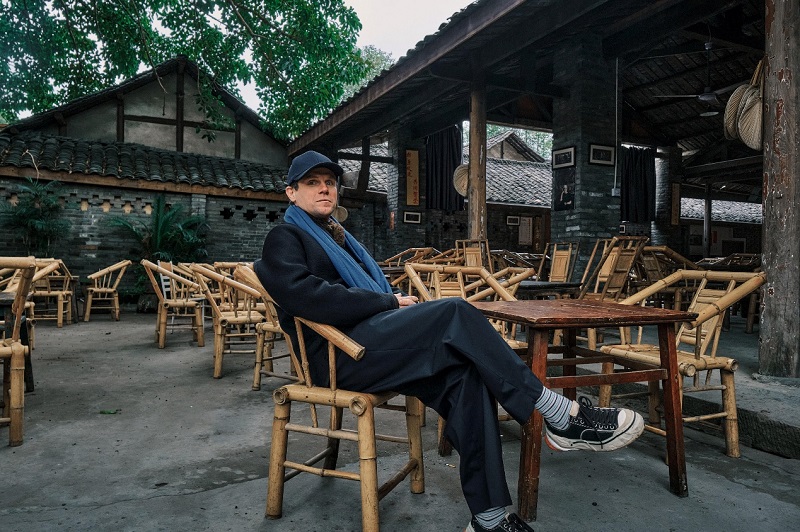
Sebastian Kaiser: My entry into theatre was deeply tied to the post-reunification era. Despite a background in hard sciences—mathematics and physics—I was drawn to the Volksbühne in the early 1990s, attending productions multiple times a week. I later formally studied theatre and cultural science in Berlin and Moscow, eventually interning at the Volksbühne in 1998.
My transition to film emerged from a major performance and media art project I realized in Crimea, set in a unique location, a submarine bunker in the Tauris mountains. This city, closed to visitors until the collapse of the Soviet Union, became the subject of my documentary Balaklava Odyssey, which was screened at several festivals. Since then, I have focused on bridging theatre and film, particularly through my project, the Artistic Intelligence Network. Films play a crucial role in the performances I realize within the Network; in fact, all our productions and theoretical discussions are documented and available as films.
This interplay between film and performance is evident in Meng Jinghui’s Teahouse, which utilizes live video extensively. Beyond the media aesthetics, however, Teahouse resonates strongly with post-revolutionary and post-Cold War phenomena. Given your roots in East Berlin, how do you view the parallels between the reunification of Germany and the sociopolitical landscape explored in your collaborations?
It is a broad and complex topic. Heiner Müller once described the GDR as a project where money was not the highest value, a contrast to the dominant narrative on the GDR that focuses solely on dictatorship and the Stasi. He highlighted an often-forgotten attempt to build a state prioritizing alternative values.
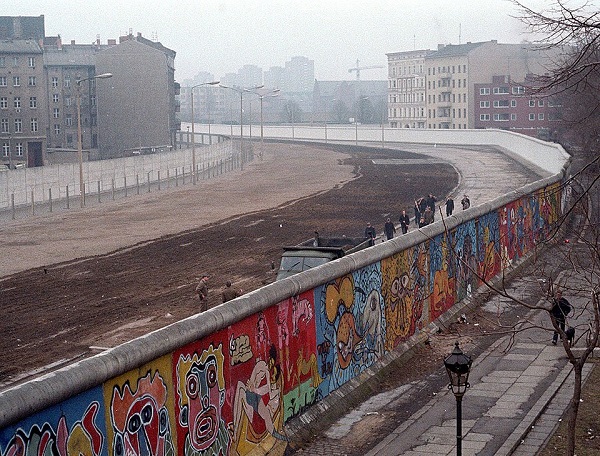
While the GDR was undoubtedly oppressive, the reunification process also had its destructive aspects. The West effectively absorbed the East, offering 100 Deutschmarks as so-called welcome money while stripping away the East’s assets, dignity and history. Nowadays the official discourse often misleadingly equates the GDR with fascism. I believe the correct perspective is that of a double dissident: one who acknowledges the oppression of the GDR, with the harsh security system and the Berlin Wall, but also critiques the mistakes of reunification, where a stronger capitalist system absorbed a weaker one.

This reminds me of the documentary series Another Life, produced by the Communist Organization in Germany, which attempts to objectively retell the social history of the GDR. The organization interviewed a group of people who lived in the GDR to document and retell their lives in that country. They involve such things as school education, the Young Pioneers, the job system and the economy, democracy and communal life in the GDR. There are certainly resonances with China’s twentieth century history, particularly regarding collective living and social organization. How did witnessing this systemic collapse and transformation in Berlin influence your artistic development?
As a teenager in East Berlin, I witnessed an explosion. Imagine two systems, Socialism and Capitalism, colliding in a single city. For those in the East, life changed entirely; universities, schools and jobs were no longer secure. Jean Baudrillard described this as a “virus for virus” model. Long before COVID, Baudrillard theorized that the East sent the virus of destabilization and power destruction, while the West brought the virus of capitalism, promoting consumption, superficial communication and money as the highest values. This destabilization affected all levels of society in East Berlin after reunification.
In this vacuum, the Volksbühne, under Frank Castorf’s direction since 1992, became a heterotopian space. It was a place where people from both East and West could discuss unification beyond the dominant narratives. It fostered a tradition of integrating theatre, philosophy, fine art and music. For instance, in 1993, the Slovenian Art group IRWIN, including the philosopher Slavoj Žižek or the Neo-Avantgarde Band Laibach, conquered the theatre, establishing their own republic within it. This tradition of transforming the theatre into a political spectacle, to use Guy Debord’s term, shaped my approach deeply. Later, I interned at the Volksbühne to assist Frank Castorf in 1998, worked in Ukraine and returned in 2007 as a dramaturg.


This clarifies the lineage of your aesthetic significantly. Turning to your work in China, I’d like to ask you how the collaboration with Meng Jinghui on Teahouse began, and why he sought out a German dramaturg for such a canonical Chinese text.
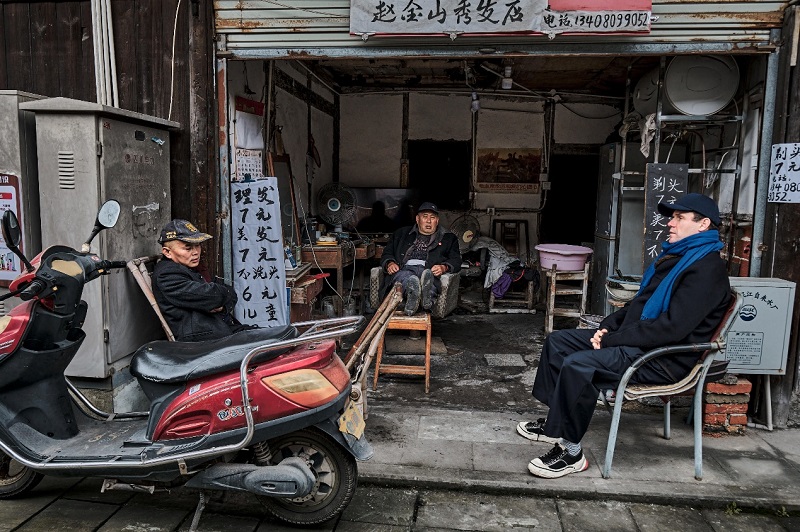
Before he invited me, Meng was already intimately familiar with the Volksbühne. When I first visited his office, I was amazed to see a VHS tape of Castorf’s very first show from 1991 at the Volksbühne. Meng had traveled to Germany and was fascinated by that theatre at a time when few international artists were watching. His knowledge of that theatre is unparalleled; I believe no one in China has such deep insights into and understanding of its productions. This mutual influence from Volksbühne is significant for our collaboration.
He invited me because he had a strong curiosity about Western dramaturgy, which was not well established in China. He viewed the collaboration as risky, with a German dramaturg and a Chinese director tackling Lao She, but it was also very challenging. So, we decided to abandon our usual frameworks and approach the project with open minds, communicating and experimenting without a fixed expectation of the result.
While dramaturgy has been introduced in China by scholars and practitioners like Li Yinan and Kai Tuchmann, Teahouse certainly made the role highly visible. In terms of the working process, did you perceive significant cultural or systemic differences between your experiences in German-speaking theatres and Meng’s Studio?
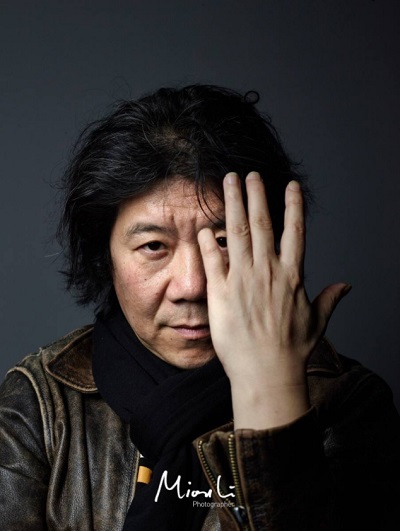
Everything was different. In Germany and Austria, theatres are heavily funded by the state. For example, at the Burgtheatre, as you know, rehearsals often begin with the final set and costumes. In China, we often rehearsed in small rooms with actors in sports clothes. Meng’s theatre operates primarily on ticket sales, much like Max Reinhardt’s commercial theatres in Germany a century ago. It is quite challenging to create serious art, staging Brecht, Chekhov or Beckett, for example, while constantly facing commercial pressure.
In British or Irish theatre systems, which lack significant government funding, independent groups survive on minimal resources. Their stages are often simple, with basic props. In contrast, German speaking theatres have elaborate and expensive set designs, as they are well funded by the government.
Yes, I also notice these differences in terms of set design between Vienna and Dublin. In Vienna the design is so expansive, even luxurious; everything may appear onstage. I was so surprised when I saw an authentic tiny jet on the stage of Volkstheatre, complemented by some huge water tanks where a group of actors could dive and swim inside. Do you think the theatre system was the biggest difference in this collaboration?
That’s just the production side. The biggest difference lies in the working method; there were no fixed procedures. We relied heavily on translation. Li Huayi, Meng’s assistant, was crucial in this regard. She acted as a bridge, much like Walter Benjamin’s concept of translation as ferrying goods across a river. That is what Übersetzung (i.e., translation) means in German. While some meaning might be lost or altered in the crossing, she ensured that the essence remained. I developed a deep understanding with Chen Minghao, who played Chang in Teahouse, through this mediated communication. Despite Huayi’s excellent translation, however, the language barrier remains a significant obstacle. We’re always waiting for translation, slowing everything down. Communication feels like giving a speech, lacking emotional depth. It’s challenging for me to convey my emotions quickly and effectively.
You mentioned that meaning can be altered during this crossing. Were there instances where mistranslation or cultural misunderstanding led to productive artistic outcomes?
Absolutely, misunderstanding is our common creative engine. A prime example occurred in Red and Black. I was discussing Stendhal’s portrayal of female autonomy with the actress Mei Ting. I recalled the works of feminist psychoanalyst Karen Horney and her book The Neurotic Personality of Our Time. I thought the character Madame de Rênal could use Horney’s words to emphasize her rivalry with the other female character Matilda.
Originally intended as an intimate dialogue, the scene transformed during rehearsals into a kind of public lecture. Something was lost in the translation from the riverbank idea of the novel to the stage, but something entirely new and productive was gained in the performance.
I remember that scene when I watched it in Shanghai. I was so surprised in the auditorium. Regarding Teahouse, what was your collaboration like with the others, with the entire cast? Was is it a collective creation, or was it mostly an exchange between Meng and yourself?
Our collaboration involved both individual input and collective creation, and not just between Meng and me. However, communication posed a challenge due to language barriers. Despite this, we dedicated a significant amount of time to prepare for Teahouse, meeting in February and working tirelessly until the November premiere. During these months, Meng Jinghui, Chen Minghao, Liu Chang and I delved deep into Lao She’s text, analyzing it extensively to uncover nuances, to understand and to see where we could make associations, where we could make something stronger, and where we could bring out something connected to Lao She’s subconscious. We explored themes and characters, aiming to amplify aspects that were previously overlooked, such as the roles of female characters.
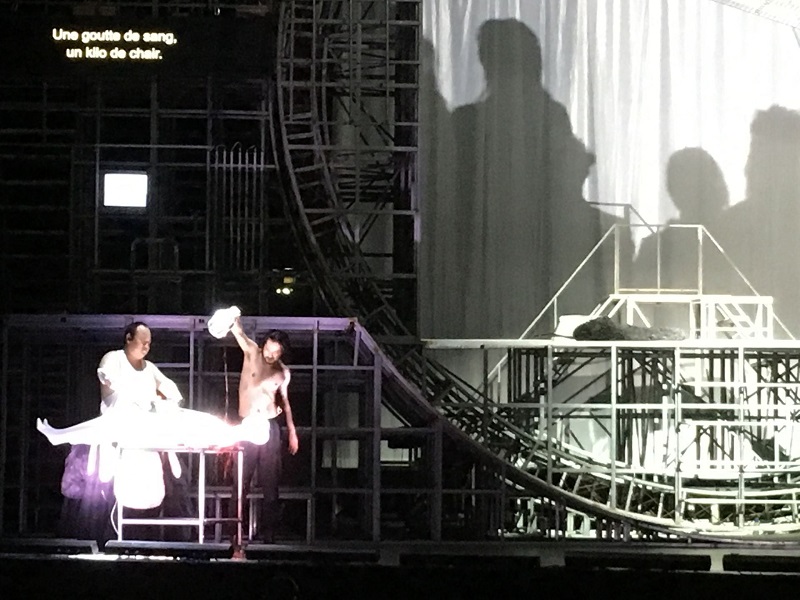
Actor Liu Chang as Pockmark Liu pouring blood on a mannequin, with a feminist reference. Opéra Confluence, the Avignon Festival, 2019. Photo: Courtesy: Meng Jinghui Studio.
What kind of texts did you read about Lao She? I know you went to the Lao She Museum and explored the production history of Teahouse, and other writings of Lao She. Did you read them in German?
I read these texts in German as they were already translated. I read everything by Lao She that was translated, including some of his novels and short stories, such as The Three Qin Brothers and Wei Shen.

Teahouse is also famous for its collage-like structure, incorporating texts from Brecht, Müller and Fanon alongside Lao She. How did you arrive at these specific intertextual choices as a dramaturg?
The idea stemmed from the nature of our collaboration, a Chinese director and a German dramaturg. I saw a parallel between Lao She and Bertolt Brecht. Both wrote in a context of celebrating Communism and raising social awareness. Interestingly, they met in New York while Brecht was in exile. Although Brecht never visited China, he was obsessed with it.
We initially looked for texts where Brecht discussed China to stage a conceptual clash between himself and Lao She. When specific Brecht texts proved unfeasible, we turned to Baal. We connected the character of Baal to Chang (the “Big Spider”), portraying him as a Beijing man with a penchant for revolutionary freedom. We also integrated Frantz Fanon to highlight the anti-colonial struggle implicit in Lao She’s play.
The production also features a recurring motif of suicide, and you integrate Dostoyevsky’s The Dream of a Ridiculous Man. Does this suggest a turn toward religious salvation for the character of Wang Lifa?

It was not about religious salvation; rather, it was a dramaturgical necessity to give Wang Lifa a voice before his end. We imagined him saying, “I will shoot myself, but before I do, I will tell you a story about an ideal world.”
Practically, Lao She’s play was written for conversational, realistic theatre. Meng’s style, which matches my background, is physical, almost kinesthetic. The short, realistic lines of the original text are difficult to use to generate the heat required for physical theatre. We extended Lao She’s lines with longer monologues from Dostoyevsky to reach the necessary temperature and rhythm of acting.
In the live video scene, Meng connects Lao She’s era with the violent revolutions of the 1960s, citing Sartre’s preface to Fanon’s The Wretched of the Earth. Was that text your idea? Why do you choose Sartre’s preface rather than Fanon’s own text, given the controversy over their different opinions on violence?
Yes, we needed a text that would fortify the position of Chang. We wanted the audience to feel a visceral anger against colonization; thus, Fanon and Sartre entered the stage. Sartre’s discussion with Camus regarding violence in the anti-colonial battle defined a generation, yet it is often forgotten today. By retrieving this discussion, we placed Teahouse and China within a global anti-colonial context.
This also connected to my work with Castorf on Faust, where we researched the self-created narrative of the West after 1945, the narrative that we are the good guys bringing freedom. History tells a different story, such as the massacre in Sétif, Algeria, on the very day of the Nazi defeat. On 9th May 1945, the Algerians went to the streets with Algerian flags to celebrate the victory over Nazi Germany, in which they were involved as members of the regular French troops. The Algerian flags were still forbidden by the colonial power France and the people were slaughtered in Sétif in a giant massacre. Integrating China into this discourse acknowledges its own complex history with imperialism, from the Opium Wars to the Japanese occupation.
That’s true. China was also partly colonized by the West for a long time from the mid-19th century until 1949. Several regions, including Shanghai, Hong Kong, and the Manchuria, were colonized by such countries as the UK and Japan.
Yes, and it happened repeatedly. Chang is the character who best represents Lao She’s position to the colonizers. He is the most independent and furious figure.
Finally, regarding Chang’s player, Chen Minghao’s presence, Chen delivers a monologue that breaks the fourth wall, reminiscent of Hamlet the Actor’s monologue in Heiner Müller’s The Hamletmachine. To what extent is this improvisation versus dramaturgical design?
I am influenced by the Fluxus movement, trying to create a moment of truth that disrupts representation. In conventional theatre, we are trapped in mechanisms of representation; post-dramatic theatre, on the other hand, seeks to destroy that machinery to deliver an honest feeling.
Minghao’s monologue, particularly the phone call scene, is a dramaturgical device designed to disrupt the flow and engage the audience in the here and now. While much comes from Minghao’s own charisma, Meng directed the structure, and I provided him with new texts up until the premiere to shape that speech. It functions as a rupture in the illusion, allowing for a moment of authentic contact.
Thank you, Sebastian. It has been illuminating to trace the lines from the Volksbühne to the contemporary Chinese stage. I am looking forward to more of your collaborations with director Meng or other Chinese artists.

*Chaomei Chen is a lecturer at the Department of English, Soochow University in China. She obtained her doctoral degree in Drama at Trinity College Dublin in 2025. Her research interests include contemporary Chinese theatre, leftist theatre, liyuanxi, and contemporary Irish theatre. She was the winner of the New Scholars Prize at the International Federation for Theatre Research (IFTR) Conference 2023. Her most recent publication is “Restaging Lao She’s Socialist Cosmopolitanism: Intercultural Dramaturgy in Meng Jinghui’s Teahouse (Chaguan) (2018-19)” (The Drama Review, forthcoming).
Copyright © 2026 Chaomei Chen
Critical Stages/Scènes critiques, #33, June 2026
e-ISSN: 2409-7411

This work is licensed under the
Creative Commons Attribution International License CC BY-NC-ND 4.0.
